Five Fixes for VR Workout Neck and Shoulder Fatigue
Quick Answer: VR workouts add 1 to 1.5 pounds on the front of your head and keep your arms elevated near shoulder height for most of the session — a combination almost no other workout produces. The fatigue is a static load problem, not a fitness problem, and it responds to strap tension, counterweighting, arm-height awareness, session structure, and some genuinely boring accessory work.
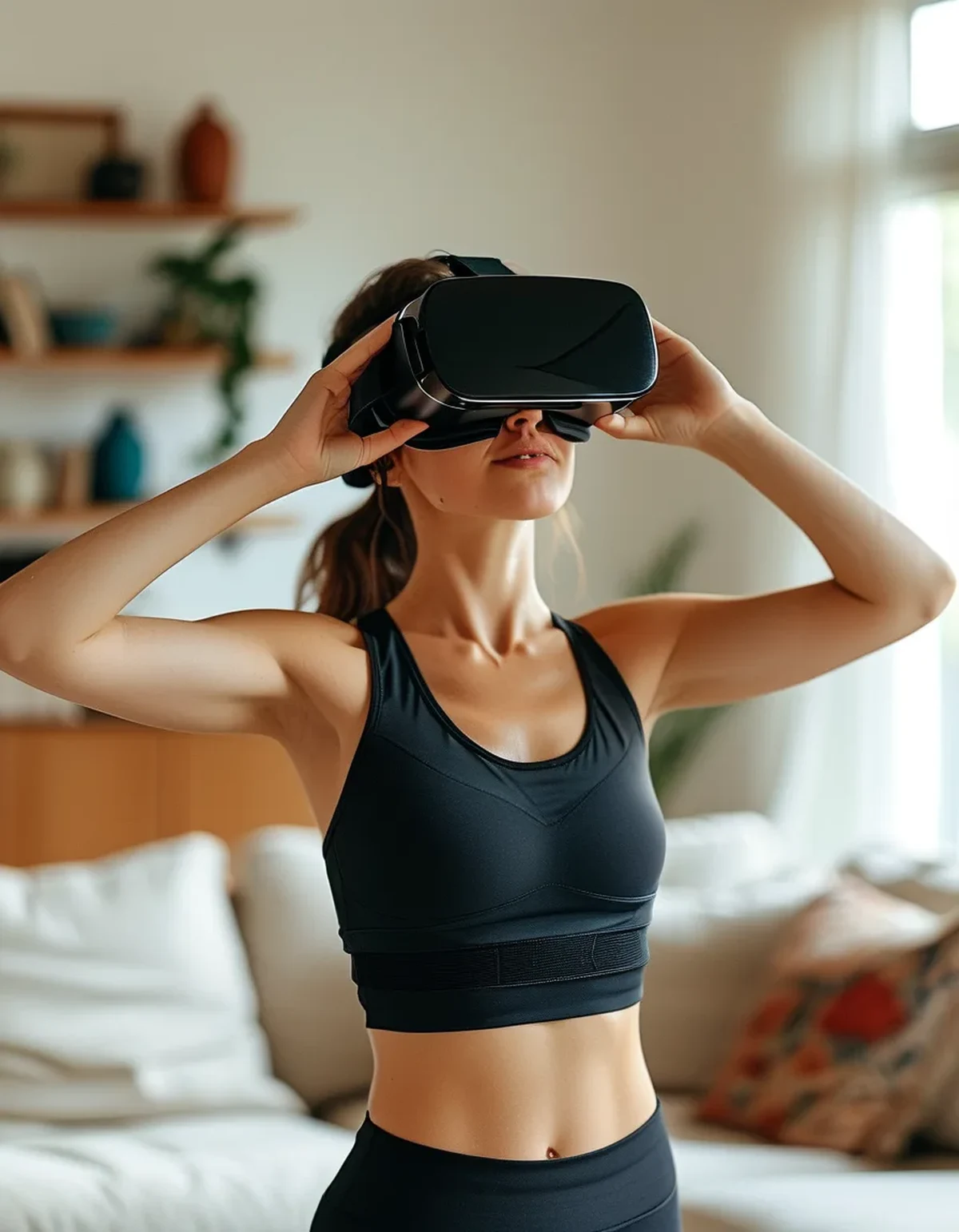
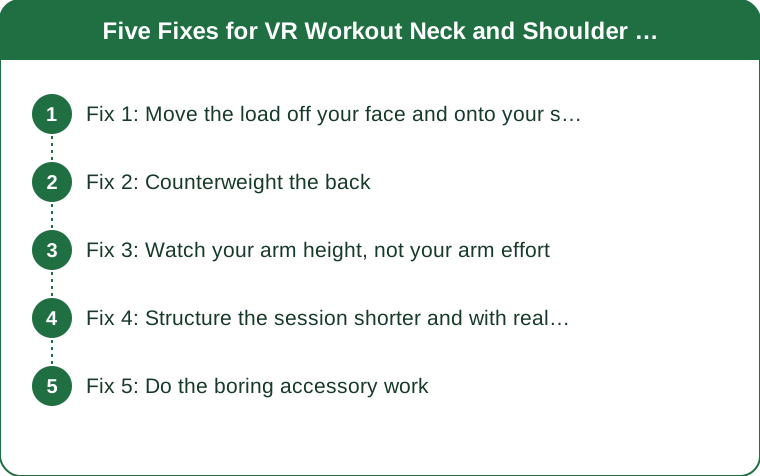
Fix 1: Move the load off your face and onto your skull
Most headset neck fatigue is a strap problem, and it is the fastest thing on this list to fix.
A headset that rests its weight on your cheekbones and forehead pulls forward, and your neck extensors spend the whole session resisting that pull. The correct arrangement puts the weight on the crown and the back of your skull, with the front just resting against your face rather than pressing.
Practically: tighten the top strap first until the headset is being carried from above, then adjust the rear cradle so it sits low on the back of your skull — around the occipital bump, not high on the back of your head. The front should feel supported, not clamped.
A test that works: with the straps set, tip your head forward slightly. If the headset slides down your face, the load is on the front. If it stays put, the skull is carrying it.
If your headset came with a soft elastic strap, the rigid halo-style replacement is the single best purchase in VR fitness. It moves the load structurally rather than distributing it.
Fix 2: Counterweight the back
A headset is a cantilever — weight in front of the neck’s pivot, with nothing behind it.
Adding weight at the back of the strap shifts the center of mass closer to your neck’s axis, which reduces the constant torque your extensors resist. It sounds like it should make things worse and it reliably makes them better.
Many people use a battery pack on the rear strap, which adds weight and runtime at once. A DIY version works fine too — a small weight or a sand pouch strapped to the back cradle.
The amount is smaller than you would guess. Roughly matching the headset’s front weight is more than needed; even half noticeably reduces forward pull. Add gradually and stop when the headset feels balanced rather than heavy.
Why it works: the fatigue is not about total weight, it is about the lever arm. Total weight goes up and perceived effort goes down, because the muscles are no longer resisting a forward moment.
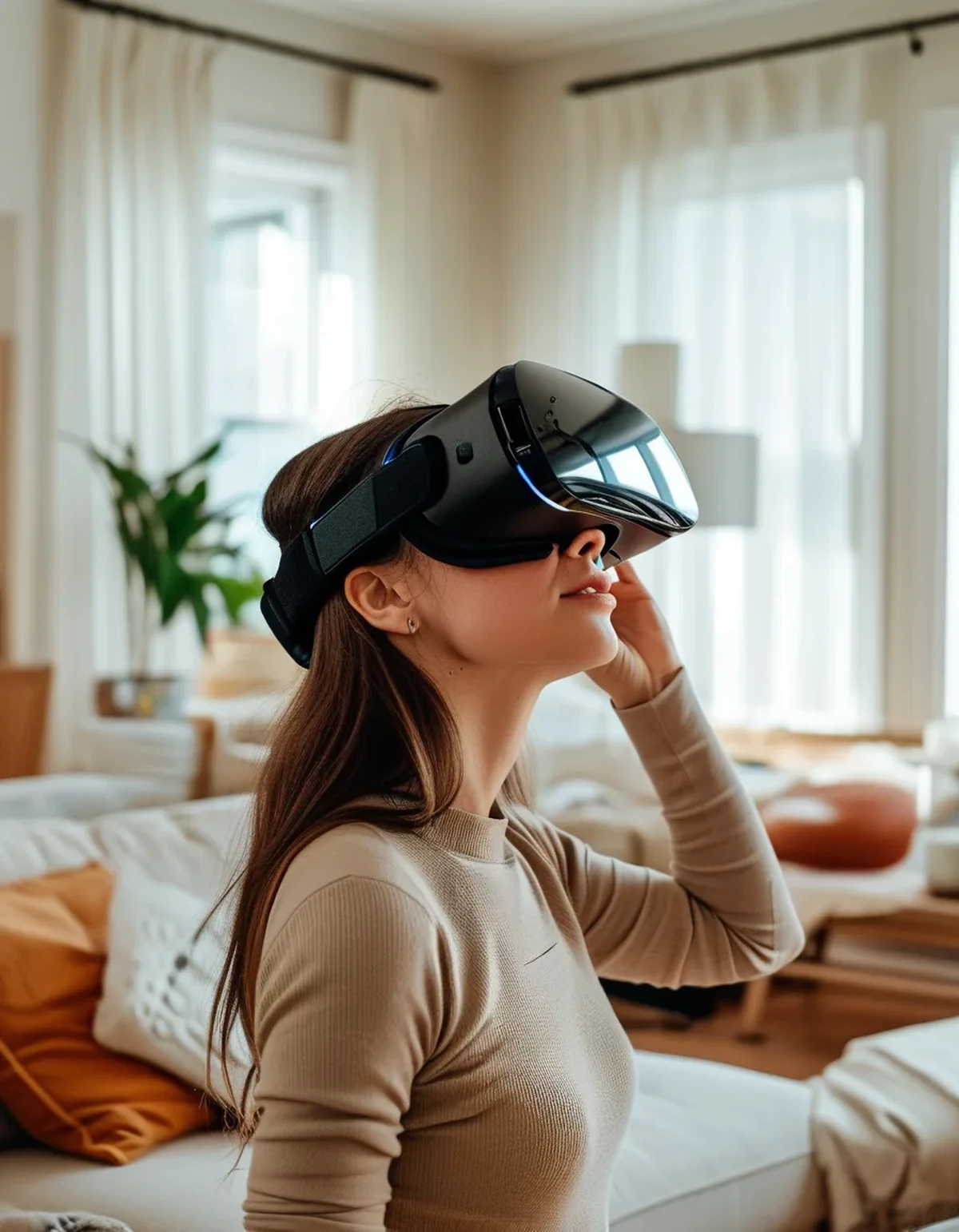
Fix 3: Watch your arm height, not your arm effort
This is the underestimated one. In rhythm games and boxing apps, your hands live somewhere around chest to shoulder height almost continuously.
Holding your arms elevated is a static load on the upper trapezius and the deltoids, and static loads fatigue fast — the same mechanism that makes holding a light grocery bag at arm’s length harder than carrying it. Add controllers and it is a small weight held out from the body for thirty or forty minutes.
The fix is not strength, it is positioning:
Set the play height correctly. If your targets are calibrated too high, you spend the whole session with arms above shoulder height. Recalibrate so that neutral targets sit at chest level.
Drop your hands between songs or rounds. Deliberately hang your arms and shake them out for ten seconds. The break in static load matters far more than its length.
Watch for shrugging. Under fatigue people raise their shoulders toward their ears, which loads the traps further. Cue yourself to keep shoulders down and back — the same cue that applies in the gym.
Fix 4: Structure the session shorter and with real breaks
VR is uniquely good at making you lose track of time, which is exactly why the neck complains.
A rhythm game holds you at a continuous arms-up posture with no natural pauses. Compare that to a gym session, which is mostly rest with brief efforts. Forty unbroken minutes in VR can involve more cumulative static shoulder time than a two-hour weights session.
Practical structure:
Cap continuous play at 20 to 25 minutes when you are starting out, then take a genuine break — headset off, arms down, look at something distant.
Do two shorter blocks rather than one long one. Same total time, dramatically less fatigue, and better performance in the second block.
Take the headset off during breaks. Leaving it on with your arms down still loads the neck. Off is off.
Watch the weekly ramp. Neck and trap soreness tends to appear after a sudden increase in play time, which is exactly what happens when someone gets a new headset. Increase by roughly 10 percent a week, the same as any other training load.
Fix 5: Do the boring accessory work
Two or three minutes, a few times a week, targeting the muscles that VR posture leaves underworked.
Chin tucks. Draw the chin straight back — not down — hold 5 seconds, 10 reps. This targets the deep neck flexors, which go quiet during any forward-head posture and are almost always the weak link.
Band pull-aparts or wall slides. 2 sets of 15. VR loads the front of the shoulder and the traps; this balances the back of the shoulder and the scapular stabilizers.
Prone Y raises. Face down, thumbs up, lift the arms into a Y. 2 sets of 10. Unglamorous, effective for the lower trapezius, which is the muscle that stops you shrugging.
Thoracic extension over a foam roller or a chair back. 60 seconds. VR play tends to round the upper back; this reverses it directly.
Do these after a session, not before — they are corrective, not a warmup. And if pain is sharp, persistent past a few days, or accompanied by numbness or tingling into the arm or hand, stop and get it assessed. This is general information, not medical advice.
How long until the fatigue settles?
Most people adapt within two to three weeks if the strap and arm-height fixes are in place. If it is not improving after that, session length is usually still too long.
Is a lighter headset worth buying for this?
Weight distribution matters more than total weight, so a strap upgrade on your current headset is a cheaper and often larger improvement than a new device.
Should I take the fatigue as a sign the workout is working?
No. Neck and trap fatigue is a postural cost, not training stimulus. The cardio work is the workout; the neck is just paying for the equipment.
TL;DR:
- VR fatigue is a static load problem: a pound-plus cantilevered off your face, plus arms held near shoulder height continuously.
- Set the top strap so your skull carries the weight, then counterweight the rear to shorten the lever arm.
- Recalibrate so targets sit at chest height, drop your hands between rounds, and stop shrugging.
- Cap continuous play at 20 to 25 minutes, take the headset fully off in breaks, and ramp weekly volume by about 10 percent.
- Add chin tucks, band pull-aparts, prone Y raises and thoracic extension after sessions — three minutes, high return.
Keep Reading
This article is for general informational and styling purposes only. Fit, sizing, and product availability may vary.