Five VR Workout Setups for Five Different Rooms
Quick Answer: VR fitness is limited by three measurements - clear floor area, ceiling height, and the distance to your nearest hard object. Most disappointing VR workouts are a space mismatch rather than a software problem. These five setups cover the realistic range, from a two-by-two-meter corner to a garage, with what each one genuinely supports.
Everybody’s VR fitness experience is different, and the variable is almost never the headset. It is whether the room lets you extend your arms without hitting a lamp.
Here are five real setups, what each one can support, and how to get the most out of the space you actually have.
Setup 1: The Two-Meter Corner
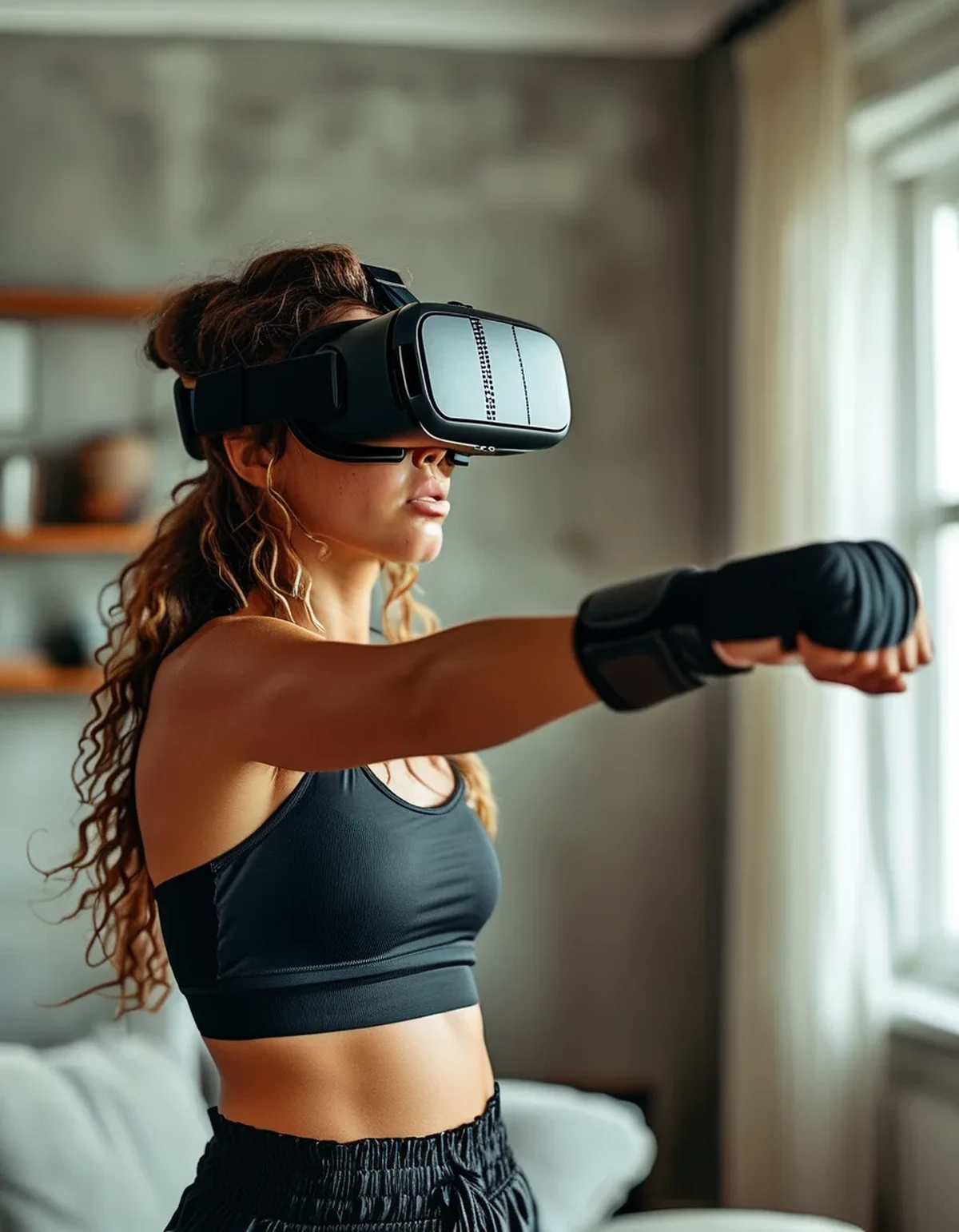
A cleared square of about two by two meters in a corner of a living room, with standard ceiling height.
This is the most common home setup and it is more capable than people expect, provided you choose the right activities.
What it supports well: rhythm games, boxing-style workouts, and anything where the movement is arms and upper body with the feet mostly stationary. These are genuinely effective workouts - sustained rhythm boxing raises heart rate substantially and holds it there.
What it does not support: anything with lunging, large lateral movement, or overhead swinging. Games that ask you to duck, dodge sideways, and step will have you outside the boundary constantly, which breaks the experience and creates a genuine collision risk.
The setup detail that matters most is what is at arm’s height around the perimeter. Floor space is what people measure and elbow-height obstacles are what people hit. Clear a radius, not a footprint.
Ceiling fans are the single biggest hazard in this setup and are worth checking before anything else.
A cheap improvement: a mat or rug that defines the space underfoot. You can feel the edge through your shoes without leaving the experience, which is a much better boundary cue than a visual warning appearing at the last moment.
Setup 2: The Cleared Living Room
Three by three meters or more after moving a coffee table, with normal ceilings and furniture at the edges.
This is the sweet spot for most VR fitness, and the extra meter in each direction changes what is possible considerably.
What it adds over the corner setup: lunging, sidestepping, squat-and-dodge patterns, and games that involve moving through space rather than standing in it. The full-body workouts that VR fitness is genuinely good at need this footprint.
The friction here is setup time. A room you have to rearrange before every session becomes a room you use twice. The difference between people who keep a VR fitness habit and people who abandon it is very often whether clearing the space takes thirty seconds or five minutes.
The fix is a repeatable, minimal clear. One coffee table that slides rather than lifts, a rug that stays, and everything else permanently outside the zone. If the clear cannot be done in under a minute, the habit will not survive a busy week.
Sweat becomes a real consideration at this size, because you are working harder. Ventilation, a towel within reach, and a headset cover you can wash all matter more than they sound like they should.
And check your floor. A rug that slides on a hard floor is dangerous during lateral movement, and hardwood plus socks is worse. Shoes or grippy socks, on a surface that stays put.
Setup 3: The Bedroom Gap
A narrow strip beside a bed, roughly one by two and a half meters, with a wardrobe on one side.
This is the most constrained setup that still works, and it works if you match the activity to the shape.
A narrow rectangle suits forward-facing activities: rhythm games where the targets come toward you, seated or stationary cardio, and shadowboxing where your feet stay planted. The constraint is lateral, so anything that asks you to move sideways is out.
The hazard profile is worse here than the size suggests. A bed on one side is soft and forgiving; a wardrobe or a wall on the other is not, and a bedside table at knee height is the classic injury. Clear the low obstacles first.
Ceiling height is often lower in bedrooms, particularly under sloped roofs, and overhead arm movements are how headsets and hands meet plaster.
Consider seated options seriously. Several VR fitness experiences work well seated, and a seated session in a small room is a genuine workout rather than a compromise - particularly for upper body and rhythm-based games.
And mind the person in the next room. Jumping in a bedroom on an upper floor is loud downstairs, which is a real constraint on when the habit can happen. Low-impact activities solve both the space and the noise problem at once.
Setup 4: The Garage or Basement
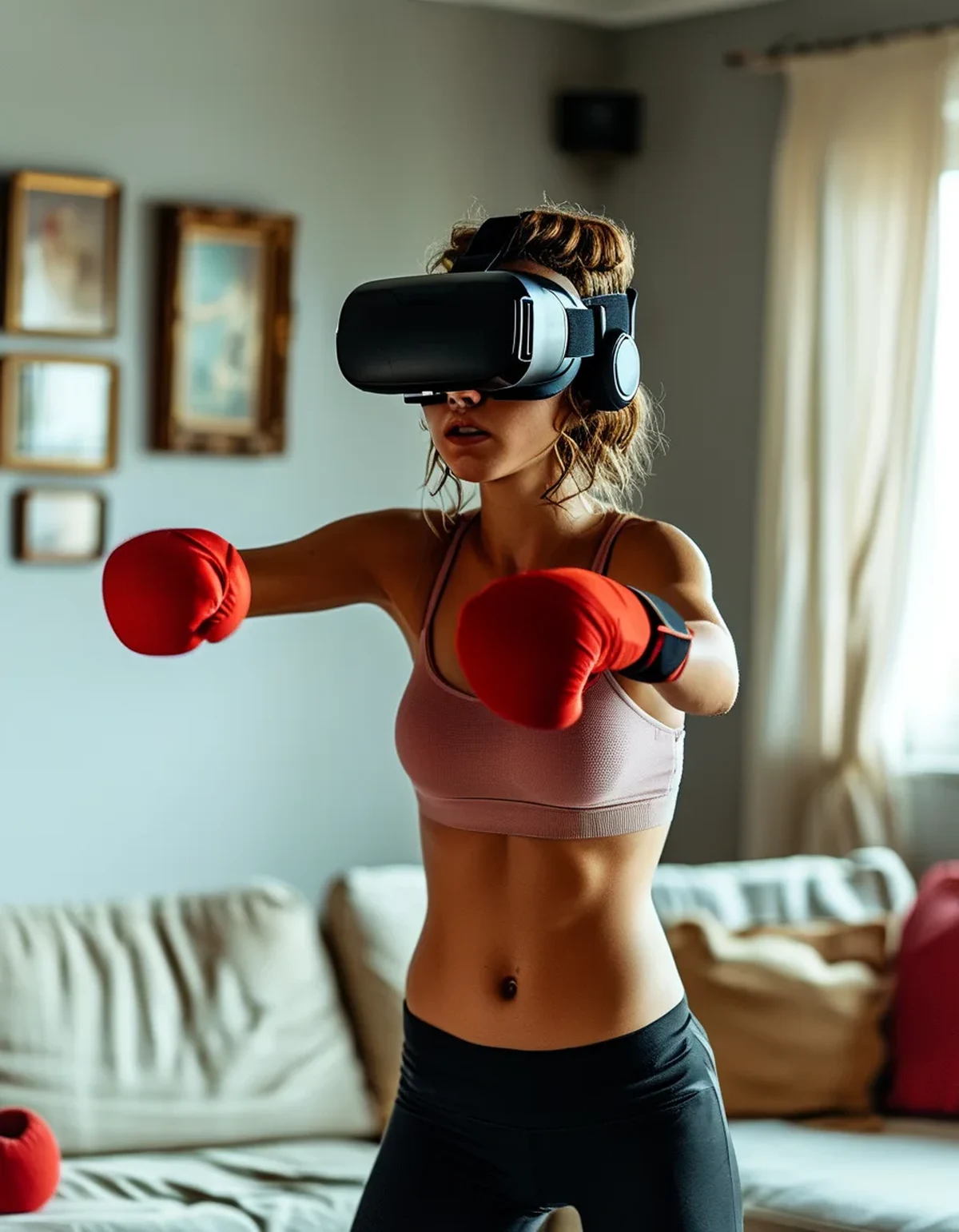
Four by four meters or more of hard floor with high ceilings, no furniture, and a concrete or similar surface.
This is the best space available to most people and it has a distinct set of problems, all of which are solvable.
What it enables: everything. Full lateral movement, overhead work, jumping, large dodges, and any game designed for a full room-scale experience. If you have this space, VR fitness will feel like a completely different product than it does in a corner.
The floor is the problem. Concrete is unforgiving for jumping and lateral movement, and a long session on it produces the same joint complaints as running on pavement. Interlocking foam tiles are inexpensive and make an enormous difference to how long you can sustain a session.
Temperature is the second problem. Garages and basements are cold in autumn and winter, and a cold start with cold muscles into a high-intensity VR session is a genuine strain risk. Warm up properly, and consider a small heater running before the session rather than during it.
Lighting matters for tracking. Headsets that track using cameras need adequate, consistent light. Dim garages produce tracking drift, which is both frustrating and disorienting.
And the isolation cuts both ways - nobody walking through the space is excellent, and nobody noticing if you fall is worth thinking about if you train alone in a basement.
Setup 5: The Shared Space You Cannot Rearrange
A room used by other people, where nothing can be permanently moved and sessions have to fit around everyone else.
This is the most common reason VR fitness habits die, and it is a scheduling problem more than a spatial one.
Match the session length to the window you actually get. A twenty-minute session that reliably happens beats a forty-five-minute one that requires the room to be empty. Most VR fitness games support short sessions well.
Standardize a minimal clear. Two objects that move, in the same direction, every time. The routine matters more than the resulting space.
Use a boundary generously. In a shared room, set the play boundary smaller than the available space, because someone will walk in. A conservative boundary and an activity that suits it is far better than a large boundary and a collision.
Pick activities that tolerate interruption. Rhythm and boxing games pause cleanly; longer structured sessions are more frustrating to break.
And put the headset somewhere visible. The gear that lives in a cupboard gets used a third as often as the gear that sits on a shelf by the space. It is a small thing and it is one of the most reliable predictors of whether a home fitness habit survives.
Worth adding as the season changes: VR fitness earns its place in autumn and winter specifically, when outdoor exercise gets dark and cold. A habit that felt redundant in July is genuinely useful in November, so it is worth setting the space up properly now rather than in the middle of a rainy month.
FAQ: VR Fitness Setup Questions, Answered
How much space do I genuinely need as a minimum?
About two by two meters of clear floor supports real, sustained workouts if you stick to stationary arm-driven activities. Below that, seated options are the honest answer.
Do I need to wear shoes?
Something with grip, yes - either trainers or grippy socks. Bare feet or ordinary socks on a hard floor during lateral movement is how people fall, and a fall in a headset is worse than a fall outside one.
Is VR fitness actually a real workout?
Sustained rhythm and boxing games raise heart rate into genuine training zones and keep it there, so yes for cardiovascular work. It is poor for progressive strength training, which needs external load. Treat it as a cardio tool rather than a complete program.
How do I deal with the headset sweating?
A washable silicone cover, a towel within reach, and a fan for airflow. Letting the headset dry properly after each session matters for both hygiene and the equipment’s lifespan.
TL;DR:
- VR fitness is limited by clear floor area, ceiling height, and elbow-height obstacles - most bad experiences are a space mismatch, not a software one.
- Two by two meters supports genuine stationary cardio; three by three unlocks lunging and lateral movement; a garage unlocks everything but needs floor padding.
- The habit survives or dies on how long the room takes to clear, so standardize a sixty-second setup.
- Grippy footwear, a defined mat edge, and a conservative boundary in shared spaces are the safety basics.
Measure the radius at elbow height rather than the floor, set the space up before the weather turns, and pick the activity that fits the room you have.
Keep Reading
This article is for general informational and styling purposes only. Fit, sizing, and product availability may vary.