5 Signs Your VR Fitness Habit Is About to Quietly Die
Quick Answer: VR fitness habits fail at friction points, not motivation points. The reliable warning signs are a headset that is never charged, a play space you have to rebuild each time, a game you have fully beaten, sessions that have quietly shortened, and a routine with no fixed time slot. Each one has a five-minute fix, and fixing them before the lapse is far easier than restarting after three weeks off.
Nobody decides to stop doing VR fitness. You just skip a Tuesday, then the headset is at 4 percent on Thursday, and by the following week the whole thing has become a thing you used to do.
All five of these are visible before the lapse happens. The third one is the one people misread as boredom.
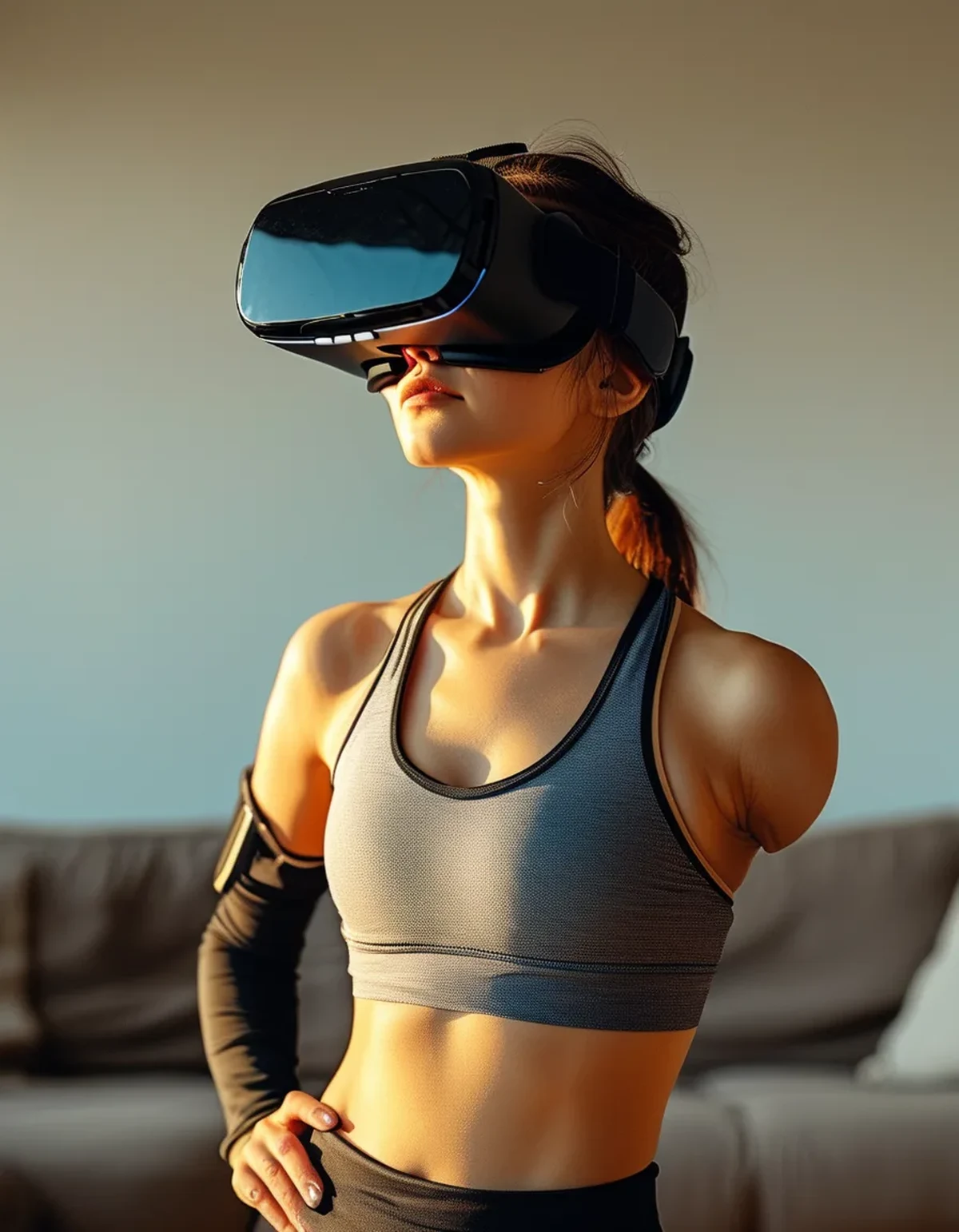
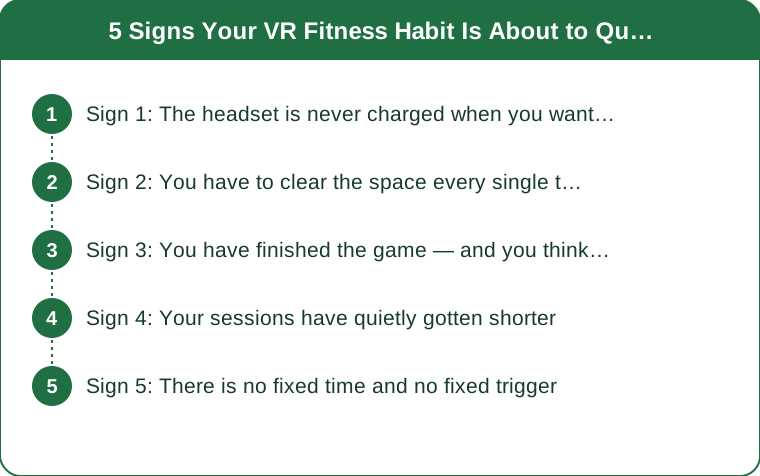
Sign 1: The headset is never charged when you want it
This is the most reliable predictor of a dying VR fitness habit and the easiest to fix.
A dead headset converts a 30-minute workout into a 90-minute wait, which is not a decision anyone makes at 6pm on a weekday. Worse, it converts it into a decision at all — and habits survive by not requiring decisions.
What is actually happening: you put the headset down after a session, sweaty, without plugging it in, because you want a shower more than you want cable management. Repeat this three times and the device is flat exactly when you next want it.
The fix, and it is genuinely this simple: put the charger where you take the headset off, not where you store it. A charging dock in the room where you work out, positioned so that putting the headset down and plugging it in are the same motion.
A battery pack or a charging stand pays for itself in adherence, not in convenience. If your headset supports it, an accessory battery in the strap changes the calculus entirely because a partial charge is enough for a session.
The tell you can check right now: go look at your headset’s battery. If it is under 30 percent and you did not plan to use it today, this sign is already active.
Sign 2: You have to clear the space every single time
The second friction point, and it costs more than it looks like it does.
If a session requires moving a coffee table, rolling up a rug, and shifting a chair, you have added a five-minute setup tax to every workout — and, more importantly, a moment where you have to decide it is worth it. Habits die in that moment.
There is a second cost too: a space you rebuild each time is a space with slightly different boundaries each time, which means recalibrating the guardian, which means more setup, and often a less confident workout because you are subconsciously unsure where the wall is.
What works: find the smallest space that supports the games you actually play, and make that space permanently clear, even if it is smaller than ideal. A reliably available two-by-two-meter area beats an excellent three-by-three you have to construct.
If a permanent space genuinely is not possible, reduce setup to a single action — a rug that rolls back in one motion, a chair on castors, a coffee table you can slide rather than lift. One motion is a habit. Five motions is a project.
Mark the corners. Small floor markers mean you set up in the same footprint each time, which keeps your saved boundary valid and cuts the recalibration entirely.
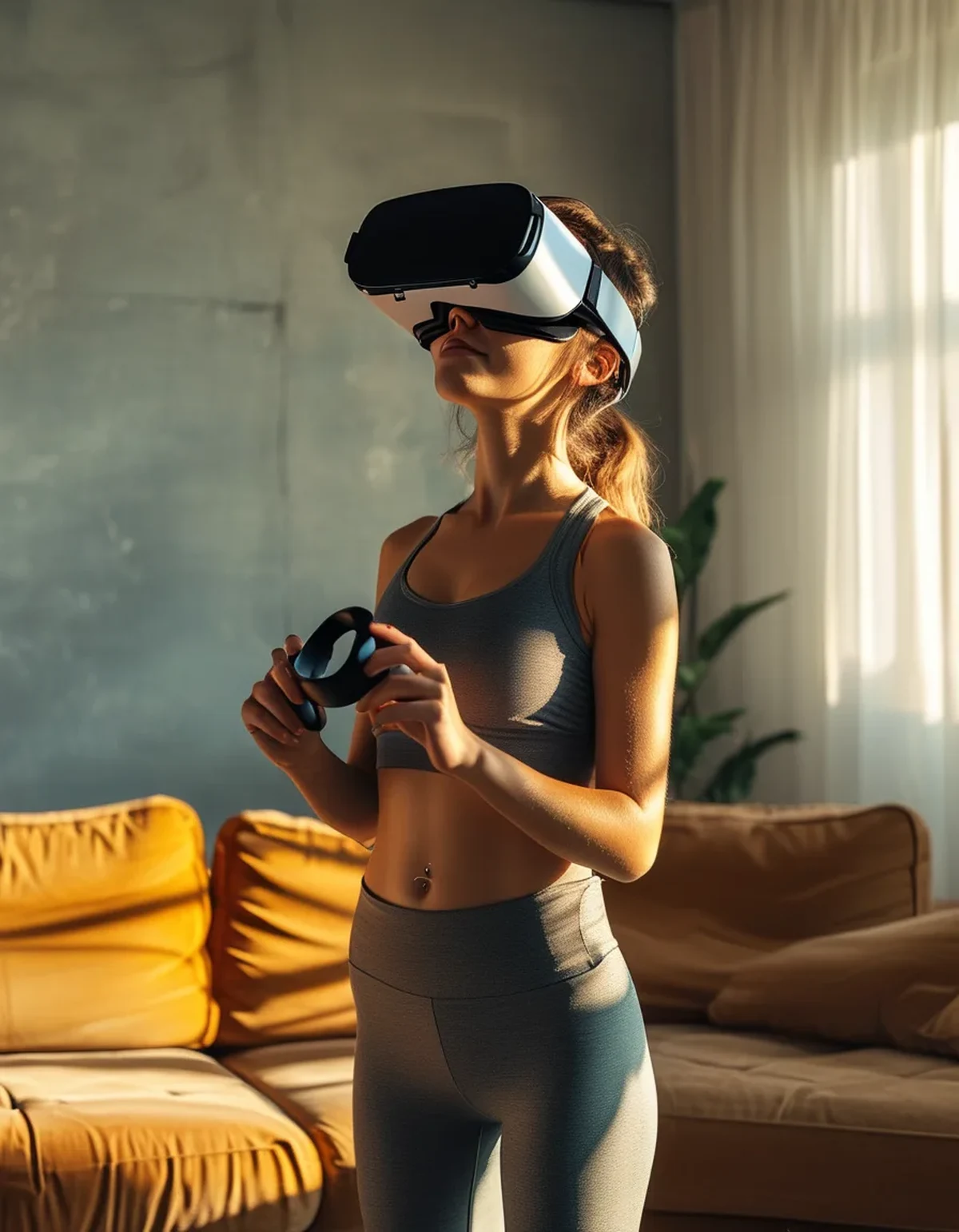
Sign 3: You have finished the game — and you think you are bored
This is the one people misdiagnose, and it is the most common reason a genuinely working habit ends.
VR fitness games are built on progression systems, and when you complete the campaign, hit the top difficulty, or exhaust the song list, the reward structure that was carrying you disappears. What you feel is a loss of interest. What actually happened is a loss of progression.
The tell is specific: the workout still feels physically good, you just cannot make yourself start it. That is a motivation-structure problem, not a fitness problem or a boredom problem.
Three fixes, in order of effectiveness:
Add an external progression. Track sessions per week, minutes, or calories in a simple log or app. Any progression restores the structure the game was providing — and it survives finishing every game you own.
Rotate two titles rather than replacing one. Alternating keeps each feeling fresher and covers different movement patterns. Boxing-style and rhythm-style games use meaningfully different muscles, which is a training benefit as well as a novelty one.
Raise the difficulty before you buy something new. Most people quit a title two difficulty tiers below its ceiling. The most cost-effective new game is usually the one you already own on a harder setting.
Sign 4: Your sessions have quietly gotten shorter
Nobody notices this one happening because each individual session feels like a normal session.
A 40-minute routine becomes 30, then 22, then a quick 15 that you count as a workout. There is nothing wrong with a short session, and the drift matters because it usually signals something else: the space is uncomfortable, the headset fit is wrong, the room is too warm, or the game has stopped holding you.
Check the causes in this order, because the physical ones are the most fixable:
Heat. VR is unusually hot — you are wearing a device on your face in an enclosed space, generating heat, with no airflow. A fan pointed at your workout space is the single most effective comfort upgrade in VR fitness and directly extends session length.
Headset fit and weight distribution. Sessions that end with pressure on your cheekbones or forehead are ending because of the strap, not your fitness. A better strap that shifts weight to the back of your skull changes tolerable session length dramatically.
Fogging. Lenses fogging within five minutes ends sessions. Warm the headset up before use, improve airflow, or use an anti-fog treatment designed for lenses.
Sweat management. A silicone or washable cover means you are not putting a damp foam pad on your face, which affects willingness more than people admit.
Then, and only then, consider whether the routine itself needs changing.
Sign 5: There is no fixed time and no fixed trigger
The structural sign, and the one that determines whether the habit survives a disrupted week.
A VR workout that happens whenever you feel like it happens roughly as often as you feel like it — which, after the novelty period, is less often than you expect.
Habit research consistently points to the same mechanism: behaviors that are attached to a stable cue survive; behaviors that depend on intention do not. The cue can be a time, or it can be another event — after the school drop-off, immediately after logging off work, straight after the 7pm show ends.
What works:
Pick three fixed slots per week rather than a vague daily goal. Three that happen beats seven that are aspirational, and a specific slot converts the question from whether to just now.
Attach it to something that already reliably happens. The end of your workday is a stronger anchor than 6pm, because 6pm moves and the end of your workday does not.
Set the space up in advance. Headset charged and on the mat, space clear, before the slot arrives. The version of you at 6pm has much less willingness than the version of you at 2pm who could spend thirty seconds preparing.
Keep a two-week visible streak. Not for gamification — as evidence. The single most common reason people restart is seeing that they had it working.
TL;DR:
- VR fitness habits die at friction points, not motivation points — and every friction point has a five-minute fix.
- Put the charger where you take the headset off, so putting it down and plugging it in are one motion.
- Keep a permanently clear space, even a small one, with marked corners so your boundary stays valid.
- Losing interest after finishing a game is a progression problem: add external tracking or raise the difficulty.
- Fix heat, strap fit, and fogging before blaming your motivation — then anchor three fixed slots to events that already happen.
The encouraging thing about all five is that none of them require more discipline. They require about twenty minutes of setup, once, applied to the specific moments where the habit was actually breaking — which is almost never the moment you thought it was.
Keep Reading
This article is for general informational and styling purposes only. Fit, sizing, and product availability may vary.