5 VR Fitness Checks If You Wear Glasses
Quick Answer: Glasses inside a headset create four specific workout problems - fogging, slipping, scratched lenses, and a reduced field of view. Prescription lens inserts solve all four at once and are the single best upgrade for anyone doing VR fitness in glasses. Until then, these five checks make the workouts usable.
Every VR fitness guide assumes you have perfect vision. Most of them do not mention glasses once.
So you strap in, sweat for four minutes, and spend the next two wiping lenses while the game politely waits.
Here are the five checks that actually change the session - each one with what to look for and what to do about it.
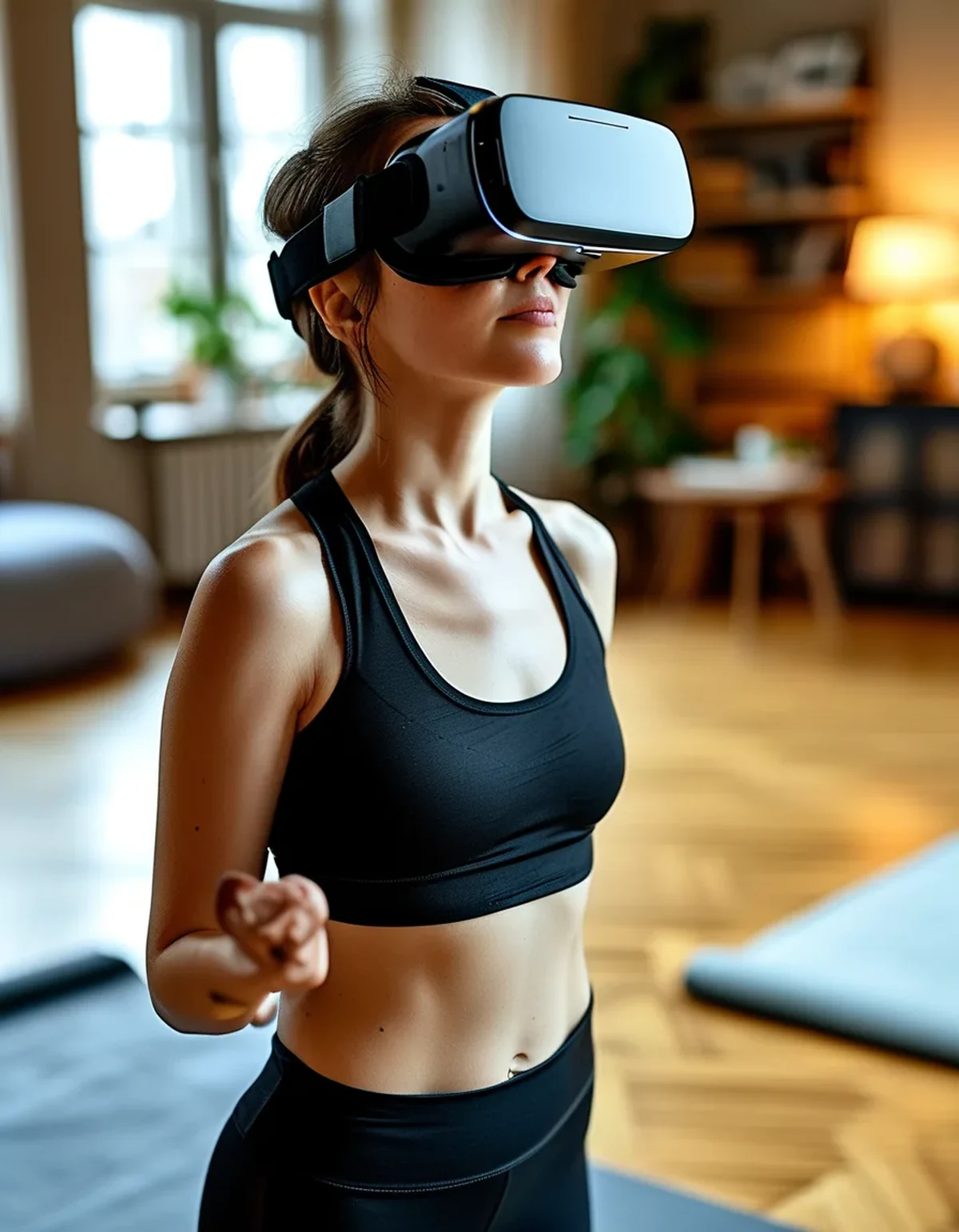
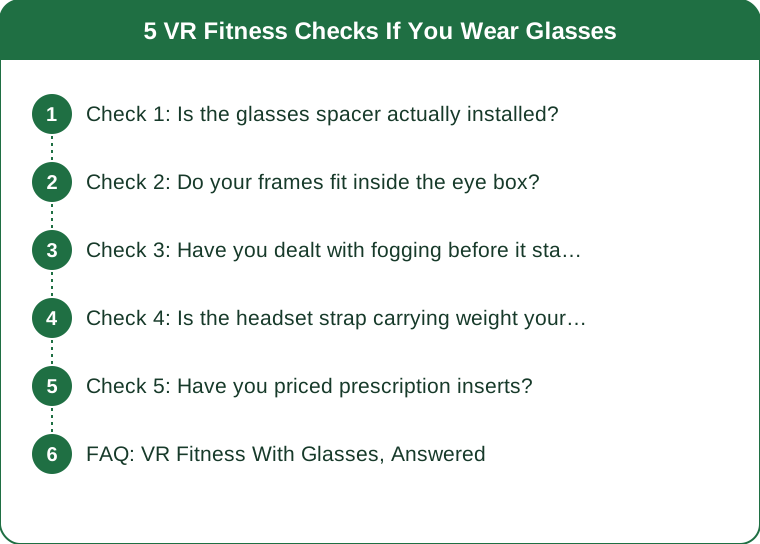
Check 1: Is the glasses spacer actually installed?
Almost every modern headset ships with a glasses spacer - a plastic ring that pushes the facial interface a few millimeters further from the lenses. A large share of glasses wearers never install it because it arrives in the box separately and looks like packing material.
Without it, your frames sit close enough to the headset lenses that any movement scrapes them. That is the number one cause of the permanent scratch ring people find on their headset lenses after a few months - and headset lenses are far more expensive to replace than glasses.
What to do: find the spacer, install it before your next session, and accept the tradeoff. The spacer costs you a slightly narrower field of view and gives you back your lenses.
The check: with the headset on, gently nod. If you feel or hear any contact between your frames and the headset, you need the spacer or a wider one.
Check 2: Do your frames fit inside the eye box?
Headsets have a maximum internal frame width, usually around 142mm wide and 50mm tall. Larger frames physically will not fit, and frames right at the limit will press into your temples within ten minutes - which becomes a headache at minute thirty.
The workout consequence is specific: temple pressure gets dramatically worse when you sweat and your face swells slightly, so a fit that is fine at rest becomes painful in the second half of a session.
What to do: measure your frame width and compare it to your headset’s stated limit. If you are within 5mm of the maximum, consider a smaller backup pair kept specifically for VR.
The check: after 20 minutes of active play, take the headset off and look for red marks at your temples. Marks mean the frames, not the headset, are doing the pressing.
Check 3: Have you dealt with fogging before it starts?
Fogging is worse with glasses because you now have four surfaces for condensation instead of two, and the extra space the spacer creates traps warm humid air.
Most people fight fog reactively - stop, wipe, resume, repeat. It never works, because the moment you put the headset back on the same conditions return.
What to do, in order of effectiveness:
- Pre-warm the headset. A cold headset in a warm room fogs immediately. Leave it out of the case for 15 minutes before use.
- Move air across the room. A fan pointed at your torso reduces the humidity you are generating and the heat driving it.
- Anti-fog wipes on your glasses lenses, not the headset lenses - most headset lenses have coatings that anti-fog products can damage.
- Start easy for the first three minutes. Fog forms fastest in the first temperature spike.
The check: if fogging appears in the first two minutes, it is a temperature problem. If it appears at minute ten, it is a humidity and airflow problem.
Check 4: Is the headset strap carrying weight your nose is currently carrying?
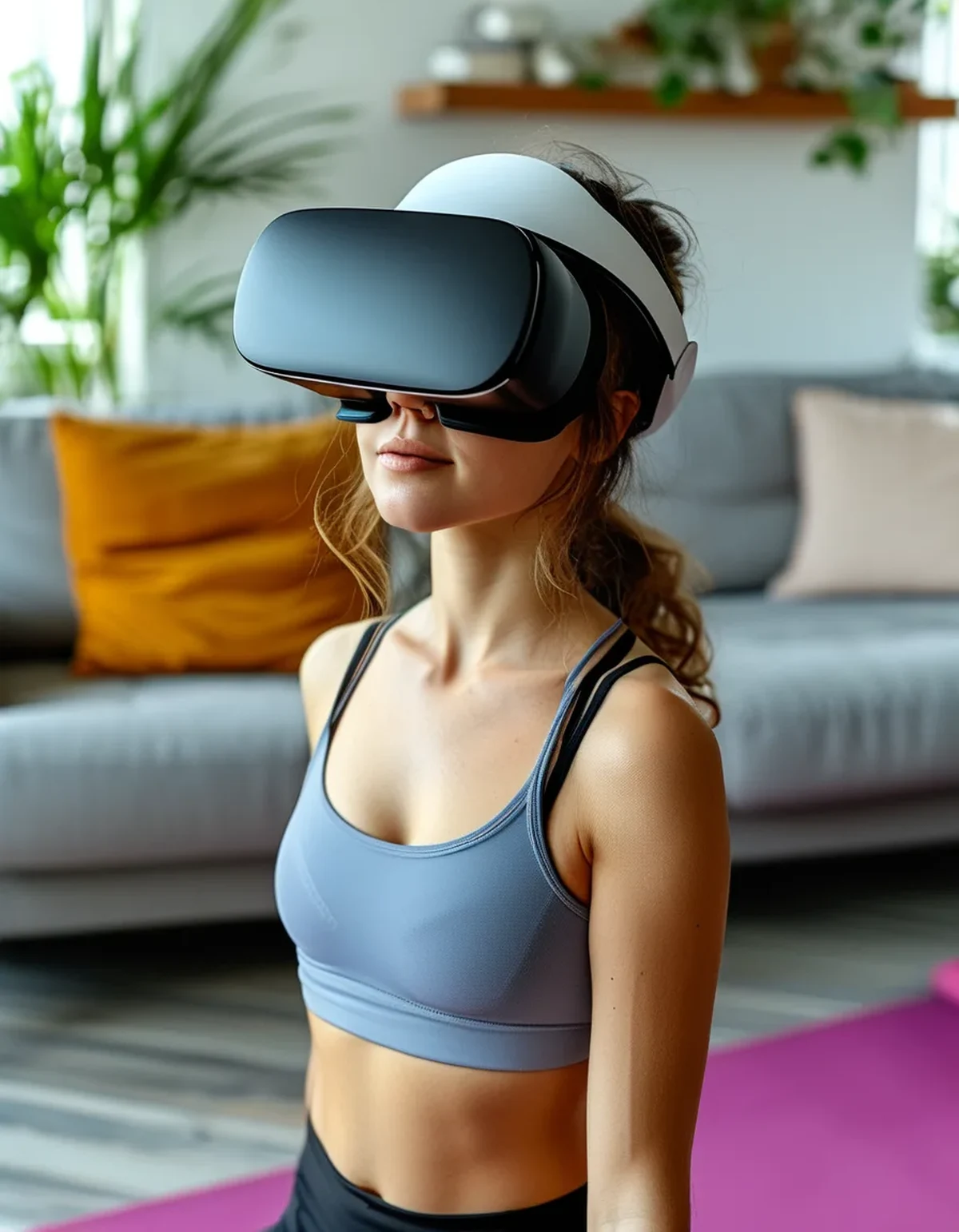
This is the one that changes the workout most. A headset should be supported by the strap around the crown of your head, not resting its weight on your cheekbones and nose bridge.
With glasses, a nose-supported headset is doubly bad: the frames get pressed into the bridge of your nose by the full weight of the device, and they slide down every time you look up.
Glasses sliding mid-workout is not a comfort issue - it changes where your eyes sit relative to the lenses, which degrades clarity and is a genuine contributor to motion discomfort.
What to do: tighten the top strap first and the rear strap second, aiming for the headset to feel like it is hanging from your crown. There should be almost no weight on your cheeks.
The check: loosen the rear strap slightly. If the headset drops onto your face, the top strap was not carrying its share.
Check 5: Have you priced prescription inserts?
Prescription lens inserts are magnetic or clip-in lenses made to your prescription that sit inside the headset, letting you use it without glasses entirely.
They solve every problem on this list simultaneously: no frames to scratch the lenses, no temple pressure, dramatically less fogging, no sliding, and the full field of view back because you can remove the spacer.
They typically run $50-100 from third-party makers with a copy of your prescription, and take a couple of weeks. For anyone doing VR fitness more than twice a week, the value is not close.
What to do: get a current prescription including your pupillary distance, order inserts, and keep the spacer in a drawer.
The check: count your sessions per month. Above about six, inserts pay for themselves in wiped lenses and abandoned workouts alone.
FAQ: VR Fitness With Glasses, Answered
Can I just wear contacts for VR workouts?
Yes, and it works well for the optics. The catch is that sweat and dry warm air from the headset make contacts less comfortable over a long session for some people - it is worth testing on a short workout first.
Will the headset scratch my glasses?
It can, in both directions. The spacer protects both sets of lenses. If your glasses already have scratches near the center, they will be far more visible inside a headset than in daily use because the lens is magnified.
Do inserts affect the resale value of the headset?
No - they are removable and headset-specific, and they arguably protect the built-in lenses from exactly the damage that hurts resale.
TL;DR:
- Install the glasses spacer. It is in the box and most people never find it.
- Frames near the headset’s maximum width become painful once you sweat.
- Fog in the first two minutes is a temperature problem; fog at minute ten is airflow.
- The strap should carry the weight from your crown, not your nose - sliding glasses degrade clarity and comfort.
- Prescription inserts solve all of it for $50-100 and are worth it above about six sessions a month.
Glasses are not a reason to skip VR fitness. They are a reason to spend twenty minutes on the setup once, so you never spend another workout wiping lenses.
Keep Reading
This article is for general informational and styling purposes only. Fit, sizing, and product availability may vary.