5 Floor Checks Before a VR Workout
Quick Answer: Most VR fitness injuries are floor problems, not game problems. You cannot see your feet, so surface transitions, rug edges, cable runs and sweat on hard flooring all become invisible hazards. Five quick checks — surface consistency, edge detection, grip under sweat, clearance underfoot and footwear choice — take under two minutes and remove most of the risk.
Five things to look at, every session.
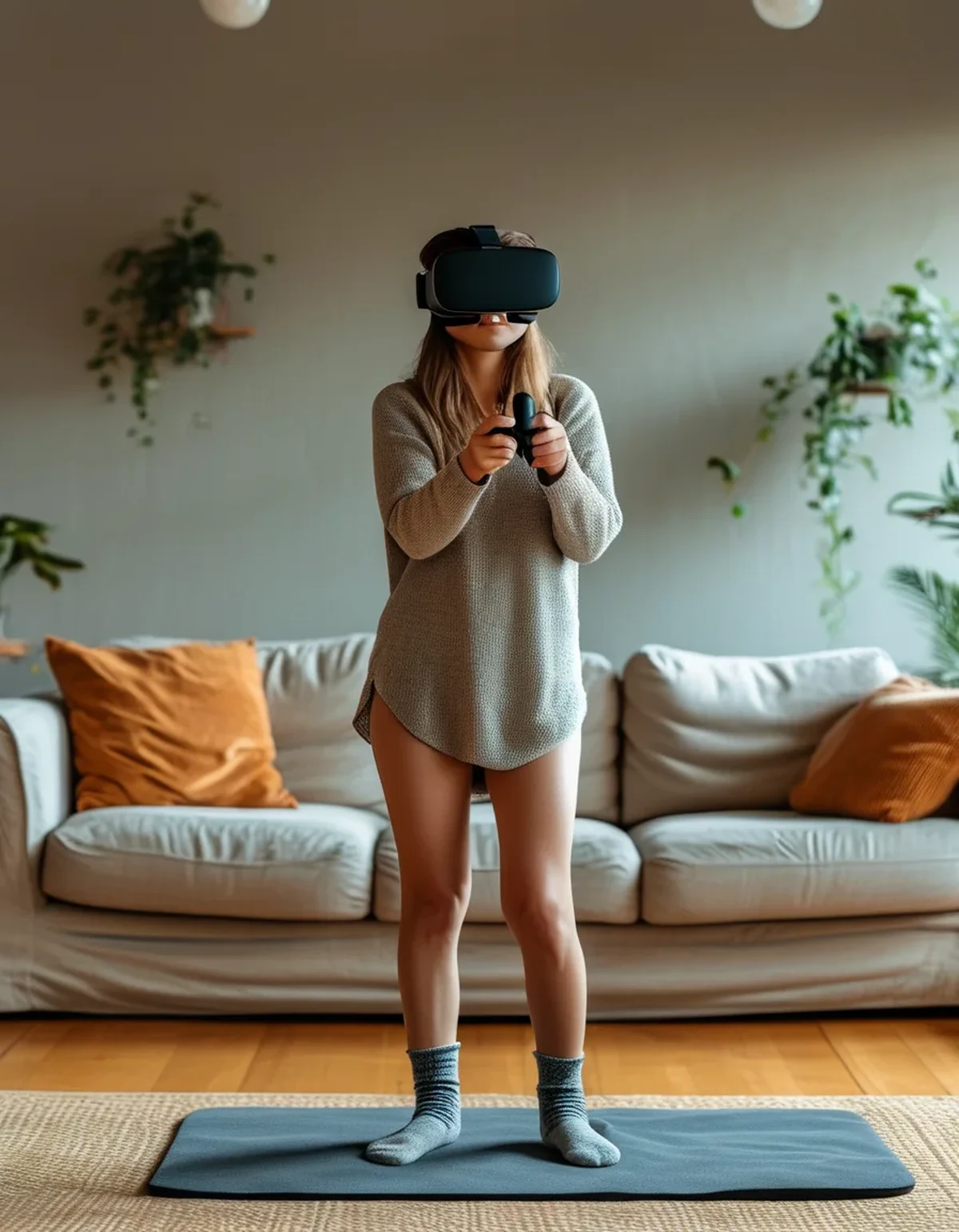
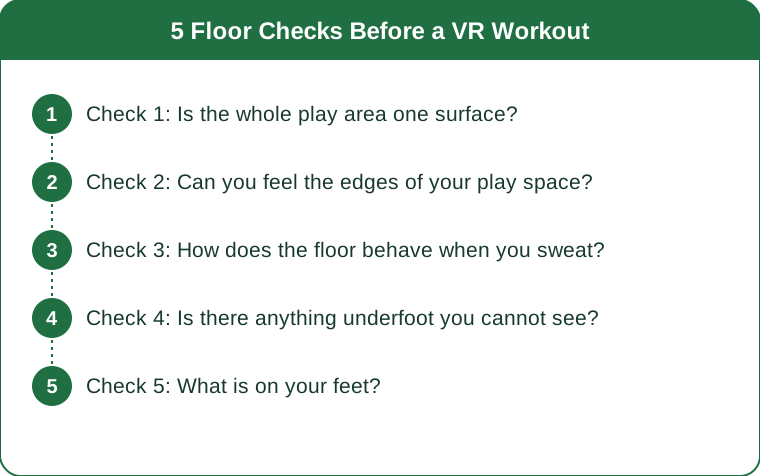
Check 1: Is the whole play area one surface?
Transitions are the highest-risk feature of a room. Carpet to hardwood, tile to rug, a threshold strip in a doorway — each one is a change in grip and height that your foot expects to be told about and is not.
Your proprioception is doing all the work. With vision occluded, the foot relies on remembered floor geometry, and a surface change violates that memory mid-movement.
A two-centimetre threshold is enough to trip on at the speed most rhythm games move you.
What to do: define the play boundary so it sits entirely on one surface, even if that makes the area smaller. A smaller consistent area is safer and plays better than a larger mixed one.
If you must cross a transition, tape the threshold flat or lay a mat that bridges it completely.
Check it every session if the room changes use. A rug that got kicked sideways during the week is the classic cause.
Check 2: Can you feel the edges of your play space?
Guardian and boundary systems are visual, and in a fast game you are often not looking at the boundary when you cross it.
A tactile edge is far more reliable. A mat with a defined edge, or a change in surface texture at the boundary, gives you a foot-level signal that does not compete for attention.
Textured tape on the floor works and costs almost nothing. You feel the ridge through a sock before you see the boundary.
What to do: put something underfoot that marks the middle of the space, so you can re-centre without looking. A mat with a distinct texture is ideal.
Re-centre deliberately between songs or rounds. Drift is gradual and you rarely notice it until you are half a metre from where you started.
And keep the boundary generous. A tight boundary triggers constantly and trains you to ignore it, which defeats the point.
Check 3: How does the floor behave when you sweat?
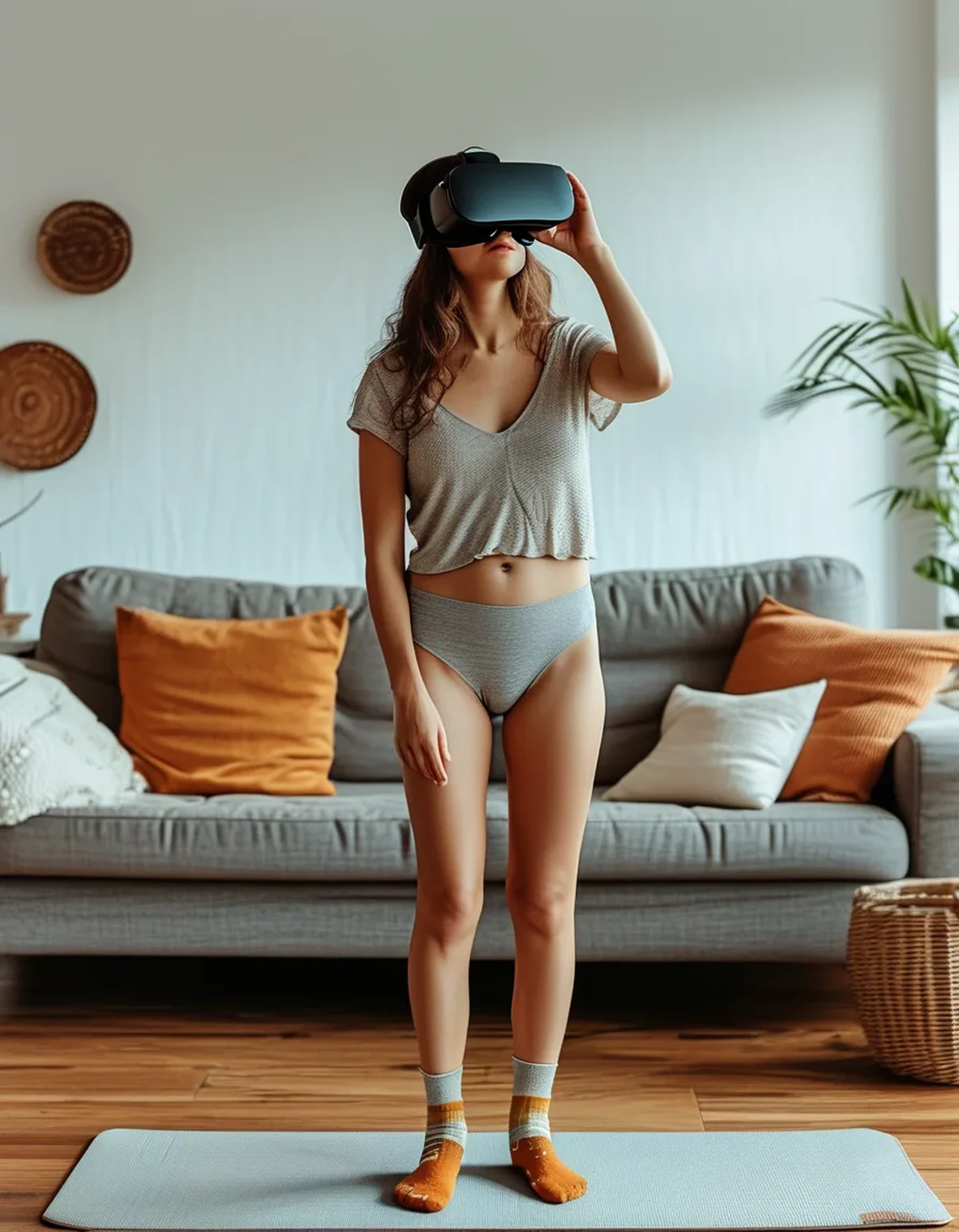
Sweat on hard flooring is the single most underrated hazard in home VR fitness. It arrives gradually, invisibly, and exactly where you have been standing most.
Sock-on-laminate is slippery even dry. Add sweat and it becomes genuinely dangerous during lateral movement.
Rubber-backed mats stay put; woven rugs do not. A rug that slides ten centimetres during a session is worse than no rug at all, because the boundary moves with it.
What to do: use a rubber-backed mat or grippy socks, and keep a towel outside the play area rather than in it.
Wipe the floor mid-session if you are training hard. Thirty seconds between rounds, and it is the cheapest safety measure available.
And ventilate. A humid room means more surface condensation on hard flooring and slower sweat evaporation, which makes both you and the floor slippier.
Check 4: Is there anything underfoot you cannot see?
Cables are the obvious one — headset cables, charging leads, controller straps left on the floor.
Less obvious: the things at foot height that you would step over normally. A low table leg, a bag strap, a pet bowl, a shoe.
Pets are the genuine hazard nobody plans for. A cat that walks into the play area is silent, invisible to you and unpredictable.
What to do: clear to a full arm-and-a-step radius, not just to arm’s length. Lateral games move you further than you expect.
Close the door. It removes the pet problem and the person-walking-in problem in one action.
Do a physical sweep with a foot before putting the headset on, rather than a visual one. You are checking what your foot will find, so check it the same way.
Check 5: What is on your feet?
Barefoot gives the best floor feedback and the least protection and cushioning. It works well on a mat and poorly on hard flooring for anything with jumping.
Plain socks are the worst option on hard floors. Minimal grip, no feedback, maximum slide.
Grippy or yoga socks are a large upgrade for very little money, and they are the default answer for most home setups.
Trainers give cushioning and grip and dull the floor feedback. For high-intensity games with a lot of jumping on a hard floor, that trade is usually worth it.
What to do: match the footwear to the surface, not to the game. Mat and low impact means barefoot or grip socks; hard floor and jumping means trainers.
And keep a dedicated indoor pair if you use trainers. Outdoor soles bring grit that scratches flooring and reduces grip.
This is general information, not medical advice. Stop and get an injury assessed if something hurts beyond ordinary soreness.
TL;DR:
- Most VR fitness injuries are floor injuries. You cannot see your feet, so the floor has to be predictable.
- Keep the whole play area on one surface and mark the centre with something you can feel.
- Sweat on hard flooring is the most underrated hazard; use a rubber-backed mat and wipe mid-session.
- Clear a full arm-and-a-step radius, close the door, and match footwear to the surface.
Two minutes of floor checks buys you a whole session of not thinking about the floor.
Keep Reading
This article is for general informational and styling purposes only. Fit, sizing, and product availability may vary.