5 Ways a Bad VR Boundary Setup Leads to Real Injuries (And How to Fix Each One)
Quick Answer: Most VR fitness injuries come from an undersized, uneven, or unchecked boundary — not the workout itself. Fixing five common boundary mistakes (space too small, furniture edges, floor unevenness, forgotten resets, and headset cable snags) removes the majority of real-world VR fitness risk.
VR fitness games are genuinely safe when your physical space is set up right. Most injury stories trace back to one of these five avoidable boundary mistakes.
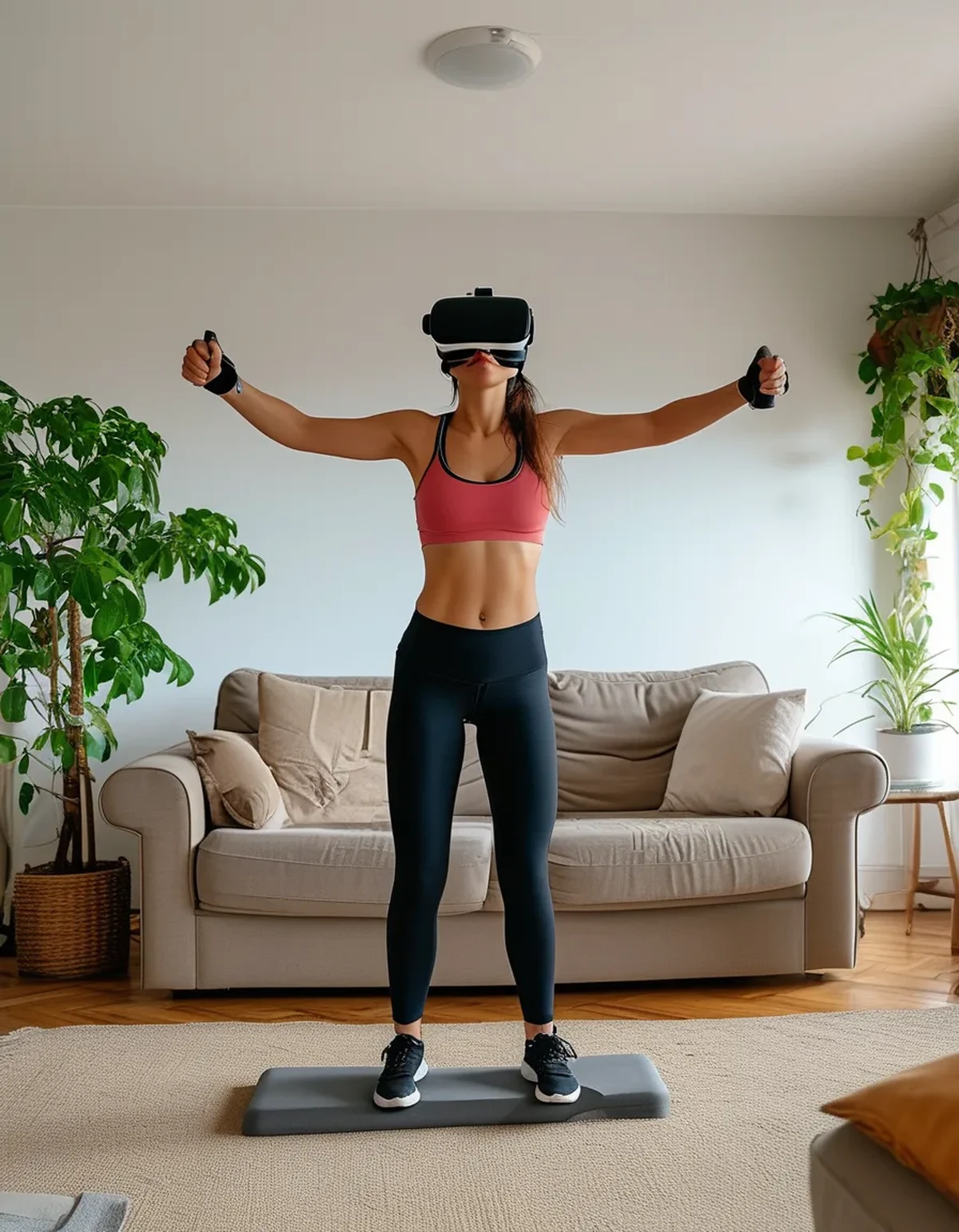
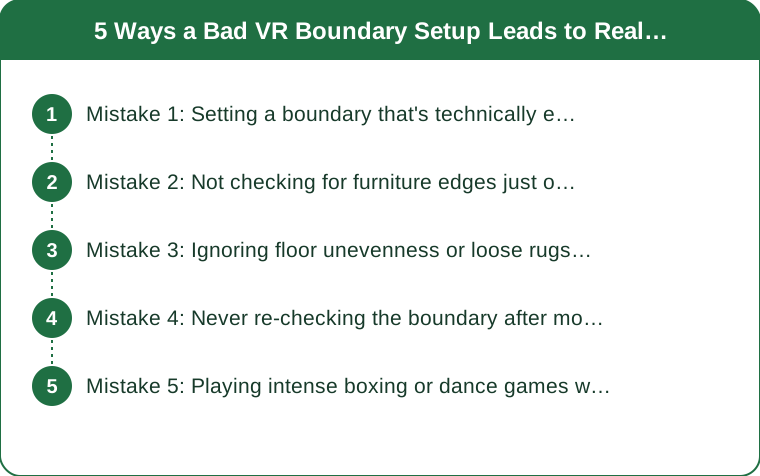
Mistake 1: Setting a boundary that’s technically enough space, but barely
A boundary that only just fits your body’s full range of motion leaves zero margin for a stumble or an unexpectedly big swing during an intense song or round. Add at least 1-2 extra feet of buffer beyond what feels like ‘enough’ when you first draw the boundary, especially for boxing or dance-style games with unpredictable movement.
Mistake 2: Not checking for furniture edges just outside the boundary line
A coffee table or shelf corner sitting just past your boundary line is still a real hazard if a stumble or overreach carries you a foot past the line — the boundary warns you, it doesn’t physically stop you. Walk the full perimeter checking for hard edges before every session in a shared space, not just the first time you set it up.
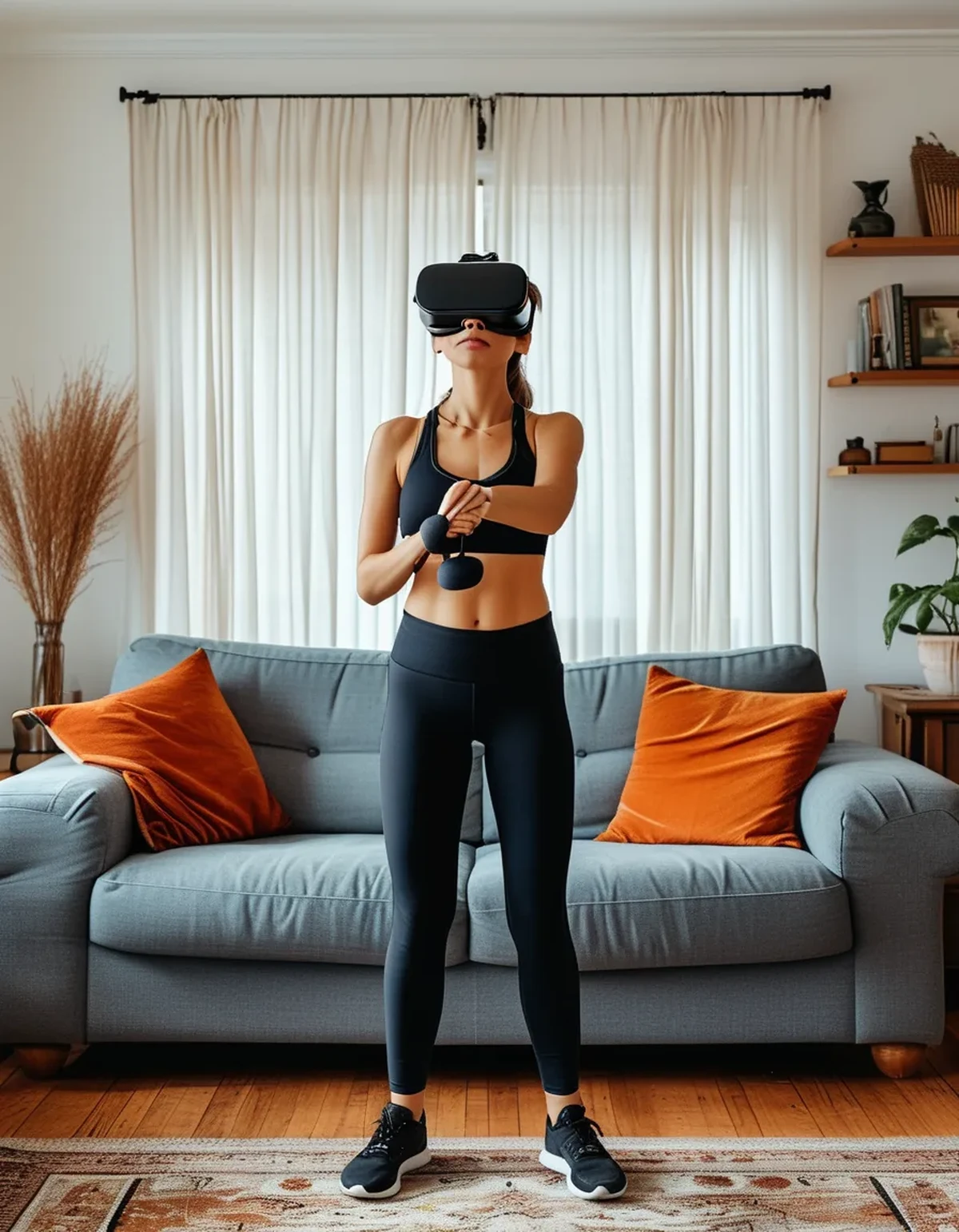
Mistake 3: Ignoring floor unevenness or loose rugs inside the play space
A loose rug edge or uneven flooring inside your boundary is a trip hazard the VR system has no way to detect, since guardian boundaries only track horizontal space, not floor texture or stability. Secure or remove rugs, and check for cords or clutter inside the play area every time, not just once.
Mistake 4: Never re-checking the boundary after moving furniture or rearranging a room
A boundary set weeks ago doesn’t automatically update if you’ve since moved a chair closer or added a new piece of furniture — most systems only warn you if you approach the original boundary line, not new obstacles inside it. Re-walk and re-check your space periodically, especially after any room changes.
Mistake 5: Playing intense boxing or dance games with a loose, unmanaged headset cable
A cable underfoot or wrapped loosely nearby is one of the most common tripping causes during high-intensity VR sessions, independent of how well the boundary itself is set. A cable management clip or overhead cable routing (or going fully wireless if your headset supports it) removes this risk entirely.
TL;DR:
- Add 1-2 extra feet of buffer beyond your first-draw boundary
- Check for furniture edges just past the line, not just inside it
- Secure rugs and cords inside the play space every session
- Re-check your boundary after any furniture or room changes
- Manage or eliminate your headset cable to remove trip risk
VR fitness injuries are almost always a setup problem, not a workout problem — five minutes of boundary checking prevents nearly all of them.
Keep Reading
This article is for general informational and styling purposes only. Fit, sizing, and product availability may vary.