VR Fitness: Gaming That Counts as Cardio
Quick Answer: VR fitness is real cardio. Popular rhythm-boxing and boxing titles produce energy expenditure comparable to moderate-to-vigorous real-world exercise — roughly in the range of tennis or rowing — and heart rates land honestly in training zones. The catch: it covers cardio only, not strength. You’ll still need resistance training. Budget an arm-span of clear space, a silicone face cover, and a fan.
Exercise science has spent decades trying to solve one problem: people quit. Not because workouts don’t work, but because most of them are boring.
VR solved it more or less by accident. Turns out if you’re busy dodging incoming objects and chasing a score, you forget to notice that you’ve been squatting for twenty minutes.

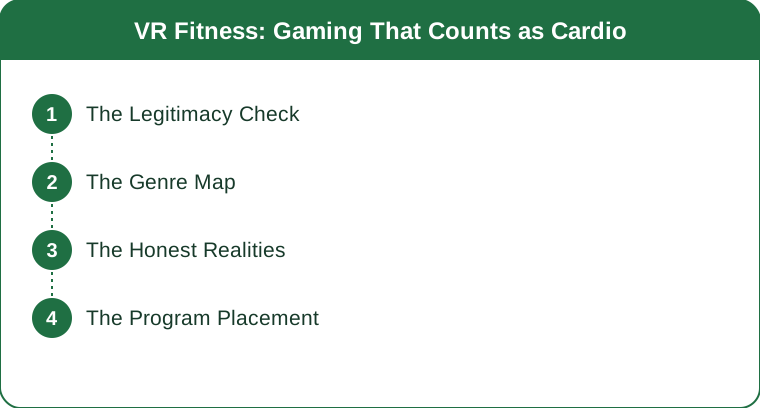
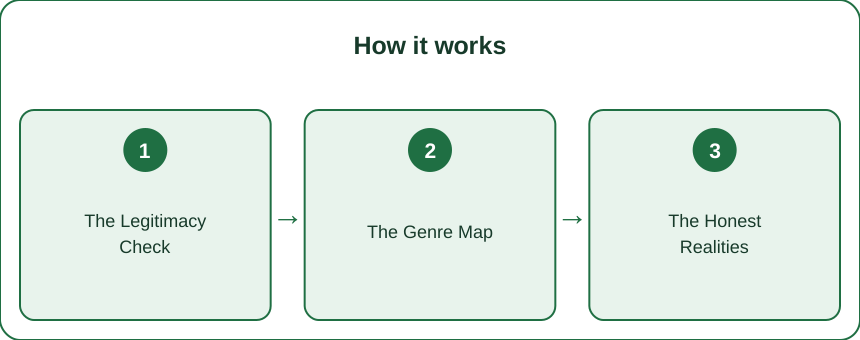
Does VR Fitness Actually Count as Exercise?
Yes, with a caveat about which games.
Independent testing organizations have measured energy expenditure across popular VR titles and consistently placed the high-intensity ones — rhythm-slashing games played at higher difficulty, and VR boxing — alongside activities like tennis, rowing, and singles badminton. Heart rates sit where they should for moderate-to-vigorous work.
The more interesting finding is about perceived exertion. When your attention is fully occupied, you rate the same physical effort as easier than you would on a treadmill. This is the dissociation effect, and it’s why 30 minutes in a headset feels like 10. For adherence — the variable every other fitness intervention loses to — that’s enormous.
The caveat: effort is voluntary. A rhythm game played with your wrists while standing still burns roughly what standing still burns. The same game played at higher difficulty, squatting into low notes and moving your whole torso, is a genuine workout. The intensity comes from how you play, not from the headset.
The Genre Map: Which Games Are Which Workout
Rhythm-slashing games — the gateway. Arms and shoulders always; full-body if you deliberately squat and lunge into the low and side patterns. Easy to make easy, easy to make brutal. Best starting point for most people.
VR boxing — the sweatiest genre by a clear margin. Real shadowboxing mechanics with a scoreboard attached, plus dodging and slipping, which is where the leg and core work sneaks in. Feet stay planted, hands move fast — which also makes it the apartment-friendly option.
Dedicated workout apps — structured classes with actual coaches, programming, and progression. Closest to a studio class, at home prices. The right pick if you want a plan rather than a game.
Dance titles — high enjoyment, moderate-to-high intensity, and the genre most likely to make you laugh at yourself.
Active adventure games — climbing, table tennis, archery. Moderate intensity, very high immersion. Good for the days you want to move without a workout.

5 Mistakes Everyone Makes With VR Fitness
1. Not clearing enough space. You need a genuine arm-span in every direction, plus ceiling clearance. The VR community’s entire comedy genre is punched ceiling fans and slapped televisions. Set your guardian boundary honestly and don’t play in a room where you have to be careful.
2. Wearing the stock foam face pad. It absorbs sweat, it doesn’t dry, and within weeks it smells. A silicone face cover costs very little and is the single best VR fitness purchase there is.
3. Ignoring lens fog. Warm face, cool lenses, instant fog. Let the headset warm up for a few minutes before playing, and point a small fan at yourself — it solves fog and overheating simultaneously.
4. Playing in loungewear. People dress for VR like they’re sitting on the sofa and then sweat like they’re in a spin class. Fitted activewear, a sweatband under the strap, and a towel nearby.
5. Starting with a locomotion-heavy game. Teleport and smooth-movement games are the ones that cause motion sickness. Start with stationary genres — rhythm and boxing — where your in-game position matches your real one. Comfort builds over a few weeks.
Where VR Fits in an Actual Program
Treat it as your cardio slot, not your whole program.
- 3–4 sessions a week, 20–40 minutes each is a solid cardio base and roughly what standard activity guidelines ask for.
- It’s ideal for the days that kill routines — bad weather, no time, no desire to be seen exercising, a gym that’s 25 minutes away.
- The streak mechanics do real work. Leaderboards, daily challenges, and score progression are gamification aimed precisely at the thing people fail at: showing up again tomorrow.
- It’s the rare workout that’s genuinely multiplayer. Partners and kids will do it voluntarily, which is not true of most cardio.
What it doesn’t cover: strength. No headset provides meaningful resistance. Keep two sessions a week of bodyweight work, bands, or weights alongside it — squats, push-ups, rows, hinges. VR handles the cardio and the adherence; the resistance training stays physical.
FAQ
How many calories does VR fitness burn?
High-intensity titles land roughly in the 6–10 calories per minute range for most adults — comparable to tennis or a moderate row — which works out to about 200–350 for a 35-minute session. Low-effort play with just your wrists burns a fraction of that, so intensity of play matters more than the game you pick.
Is VR fitness good for weight loss?
It’s as effective as any other cardio at the same intensity, and better than most at the part people fail: doing it consistently. Pair it with a modest calorie deficit and two strength sessions a week, and it works. On its own, no form of exercise reliably outruns diet.
Can I do VR fitness in a small apartment?
Yes, if you pick stationary genres. Boxing and rhythm games only need you to plant your feet and move your upper body, which fits in a space about 6x6 feet. Avoid room-scale games that expect you to walk around, and always set your guardian boundary conservatively.
TL;DR:
- VR fitness produces real training-zone heart rates — comparable to tennis or rowing.
- Intensity depends on how you play; squat and move your whole body, don’t just flick your wrists.
- Boxing is sweatiest; rhythm games are the best starting point; workout apps give you structure.
- Get a silicone face cover and a fan, and clear a genuine arm-span of space.
- It replaces cardio, not strength — keep two resistance sessions a week.
Keep Reading
This article is for general informational and styling purposes only. Fit, sizing, and product availability may vary.