5 Cooling Fixes for VR Workouts in a Hot August Room
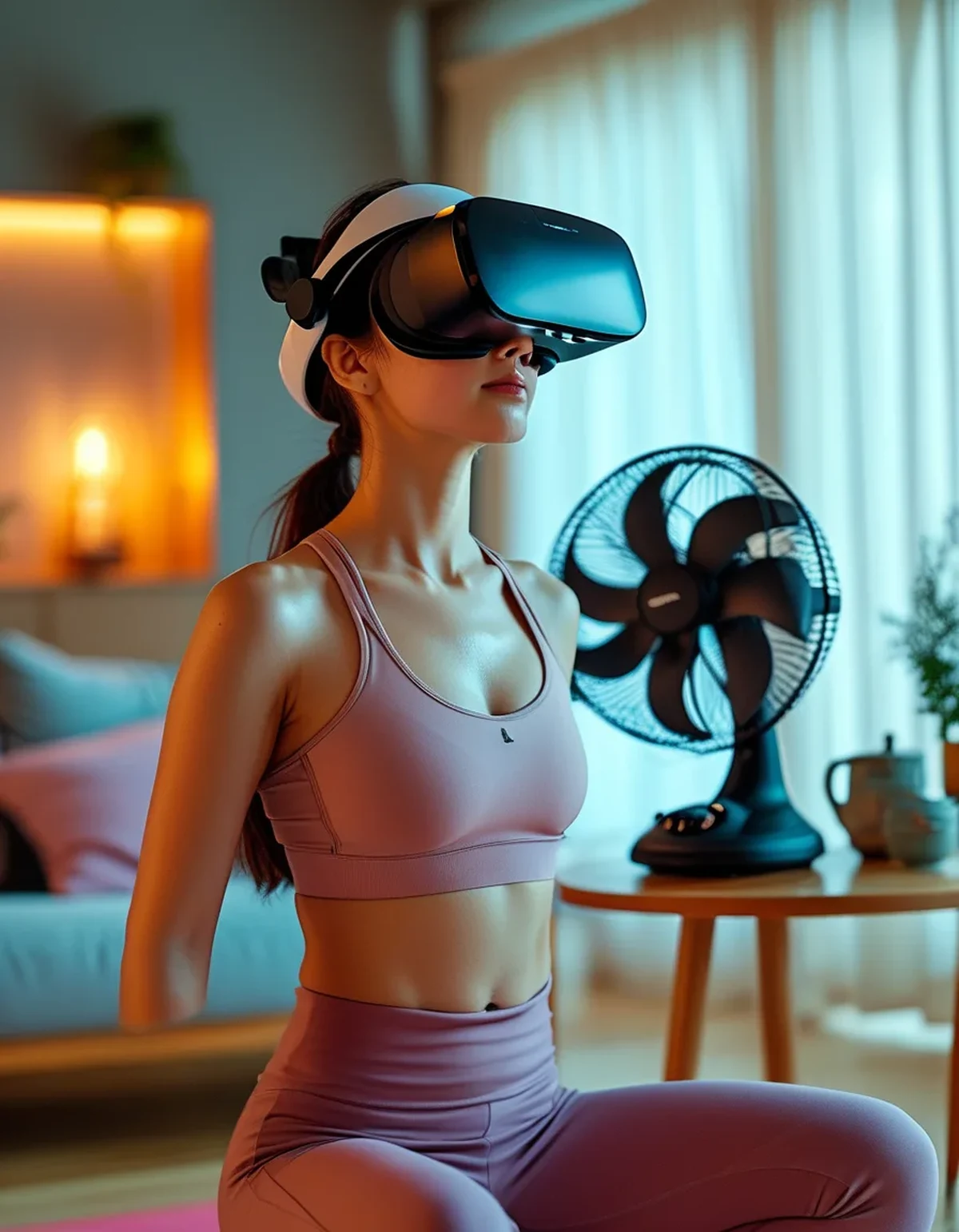
Quick Answer: VR workouts feel hotter than the same effort without a headset because the visor blocks evaporative cooling from your face and forehead, which is where your body prefers to dump heat. The fixes are environmental rather than heroic: aim a fan at your torso instead of your face, pre-cool the room 15 minutes before you start, swap the stock foam facial interface for a wipeable silicone one, drop session length and add a second session, and keep a cold towel within reach of your play space.
You finish a track that felt easy in May and you are soaked. Nothing about your fitness changed. The room did, and so did the way your face is allowed to cool itself.
Why do VR workouts feel so much hotter in late summer?
Your face and scalp carry a dense supply of surface blood vessels, and under normal exercise conditions a huge share of your cooling happens right there through sweat evaporating off your forehead and cheeks.
A headset covers exactly that zone. The foam interface presses against skin, traps a humid pocket of air, and stops evaporation almost completely. Sweat still forms, it just has nowhere to go, so it pools and drips instead of cooling you.
Add a room sitting at 78 to 82°F with the late-summer humidity most of the country is carrying in August, and your body loses its second-best cooling route too. The result is a session that reads as brutal on your rating of perceived exertion while your actual heart rate says moderate. You are not less fit than you were in spring. You are less able to shed heat.
Fix 1: Point the fan at your chest, not your face
The instinct is to blast air straight at the headset. It does almost nothing, because the foam seal is what’s blocking evaporation and moving air cannot get behind it.
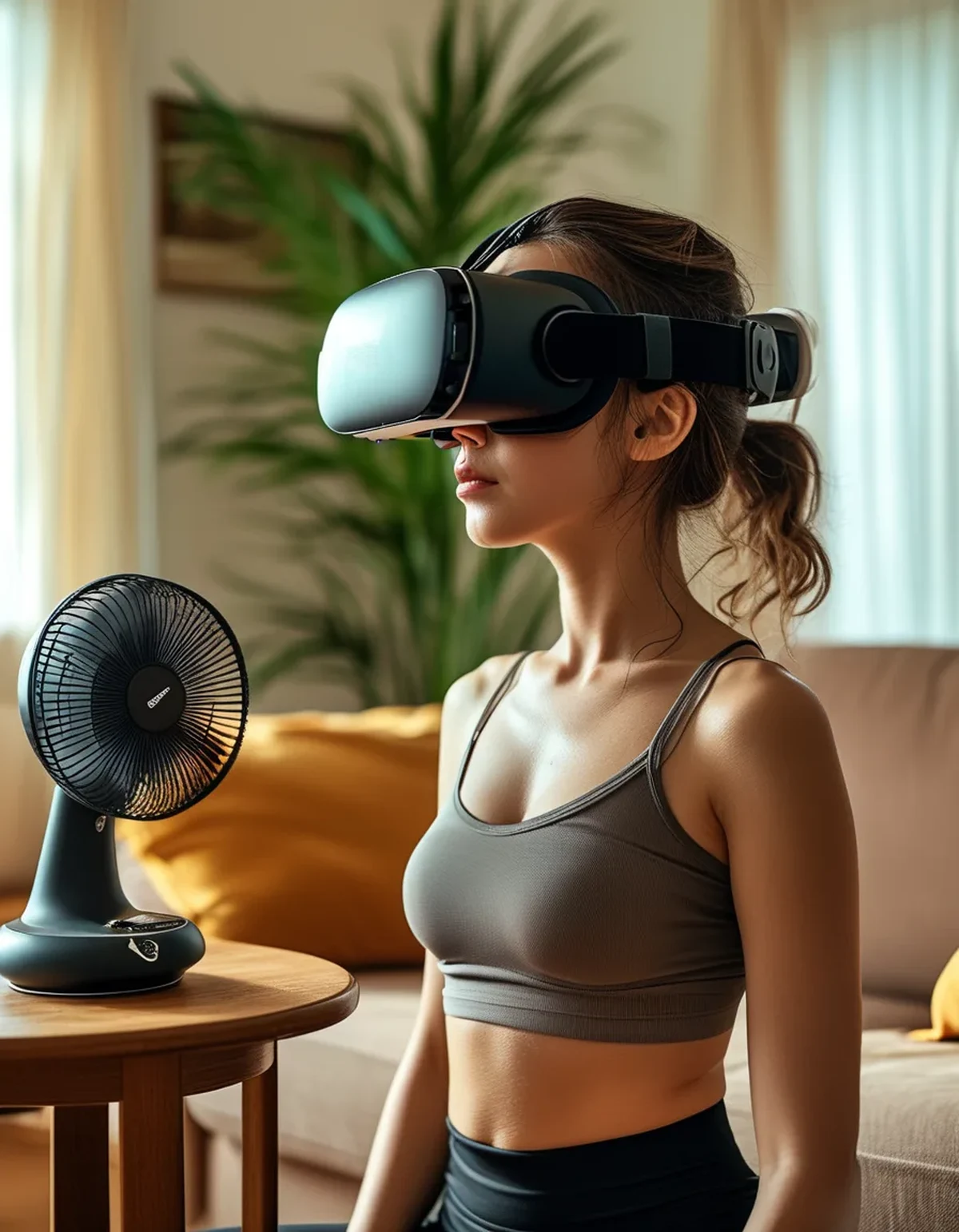
Put a 20-inch box fan or a decent tower fan at chest height, three to four feet away, angled at your torso. Your chest, back, and arms are uncovered, they sweat freely, and airflow there actually converts that sweat into cooling. Most people report the difference within one song.
A second benefit: torso airflow keeps your shirt from turning into a wet insulating layer, which is its own heat trap. If your play space has a doorway, opening it and creating a cross-breeze is worth more than a second fan.
One caution: do not place the fan inside your guardian boundary. A punch drill and a spinning fan blade is a story you do not want to tell.
Fix 2: Pre-cool the room before you put the headset on
Rooms have thermal mass. Walls, furniture, and floors hold heat from the afternoon and keep radiating it back long after the air feels cooler, which is why an AC unit switched on at the moment you start playing is always losing the race.
Run the AC or the fan for 15 minutes before your session, with the door closed so you are only cooling the space you will actually use. Target roughly 70 to 72°F at the start. You will drift up several degrees during a hard session anyway, and starting low buys you the whole workout.
If you have no AC, move the session. A 7 a.m. or 9 p.m. slot in August is often 10 to 12 degrees cooler than 5 p.m., and that swing does more for your session quality than any gear purchase.
Fix 3: Change the facial interface and the strap
Stock foam is the single worst part of most headsets in summer. It absorbs sweat, holds it, grows bacteria, and by week three it is both soggy and unpleasant.
A silicone or PU-leather facial interface wipes clean in five seconds and does not sponge up moisture. Some designs include ventilation channels or a small gap at the nose that lets a trickle of air move across your face. It is a modest cooling gain and a large hygiene gain.
Swap the elastic strap for a rigid halo-style head strap if you have one. It shifts weight to the crown of your skull and reduces the clamping pressure on your cheeks, which means less trapped heat and fewer pressure marks.
Keep two interfaces in rotation during summer so one is always dry. It costs less than a month of a fitness app subscription.
5 Mistakes Everyone Makes With Summer VR Sessions
1. Playing the same 45-minute block as in winter. Heat load compounds. Two 20-minute sessions with a break in between deliver more quality work than one long grind.
2. Drinking only after the session. You cannot see your water bottle with a headset on, so you forget it exists. Set a bottle at a fixed spot just outside the boundary and take a pull between every track.
3. Wiping the lenses with the same cloth you wiped your face with. That is how lens coatings die. Keep a microfiber for optics only.
4. Ignoring the floor. Carpet holds heat and dampens airflow at ankle level. A hard-floor play space runs noticeably cooler.
5. Treating dizziness as motion sickness. In a hot room it is often early heat strain. If you feel lightheaded and your skin is clammy, that is a stop signal, not a push-through-it signal.
FAQ: Hot-Weather VR Fitness Questions, Answered
Does sweating more in VR mean I burned more calories?
No. Sweat volume tracks heat load and humidity, not energy expenditure. A humid August session can double your sweat rate at the same effort. Judge the session by heart rate and how many rounds you completed, not by how wet your shirt is.
Is it bad for the headset to sweat into it?
Yes, over time. Salt and moisture degrade foam, corrode contacts, and can fog lenses from the inside. Wipe the interface after every session, leave the headset out of its case until fully dry, and never store it face-down on a soft surface.
How hot is too hot to play?
There is no single number, but above roughly 80°F with high humidity most people should shorten sessions and add breaks. If your heart rate stays elevated during rest intervals instead of dropping, the room is beating you and it is time to stop.
TL;DR:
- The headset blocks evaporation from your face, which is your body’s preferred cooling surface, so VR feels hotter than equivalent effort without one.
- Aim a fan at your torso, not your face, from three to four feet away and outside your guardian boundary.
- Pre-cool the room for 15 minutes to about 70 to 72°F rather than starting the AC when you start playing.
- Swap stock foam for a wipeable silicone interface and keep two in rotation through summer.
- Split long sessions into two shorter blocks and treat lightheadedness as a stop signal.
None of this is about being tougher. Heat is a physics problem, and every one of these fixes is just giving your body a route to dump warmth that the headset took away. Get the room right and the sessions you had in spring come back, same legs and all.
Keep Reading
This article is for general informational and styling purposes only. Fit, sizing, and product availability may vary.