The Room-Scale Safety Setup Mistake That's Limiting Your VR Workout Intensity
Quick Answer: Most people unconsciously hold back in VR workouts because their guardian boundary is set too close to real furniture, so their body senses the collision risk even before the headset warns them. Setting your play space with at least 2 feet of buffer beyond your guardian boundary — not right up to the furniture line — removes that hesitation and lets you move at full intensity.
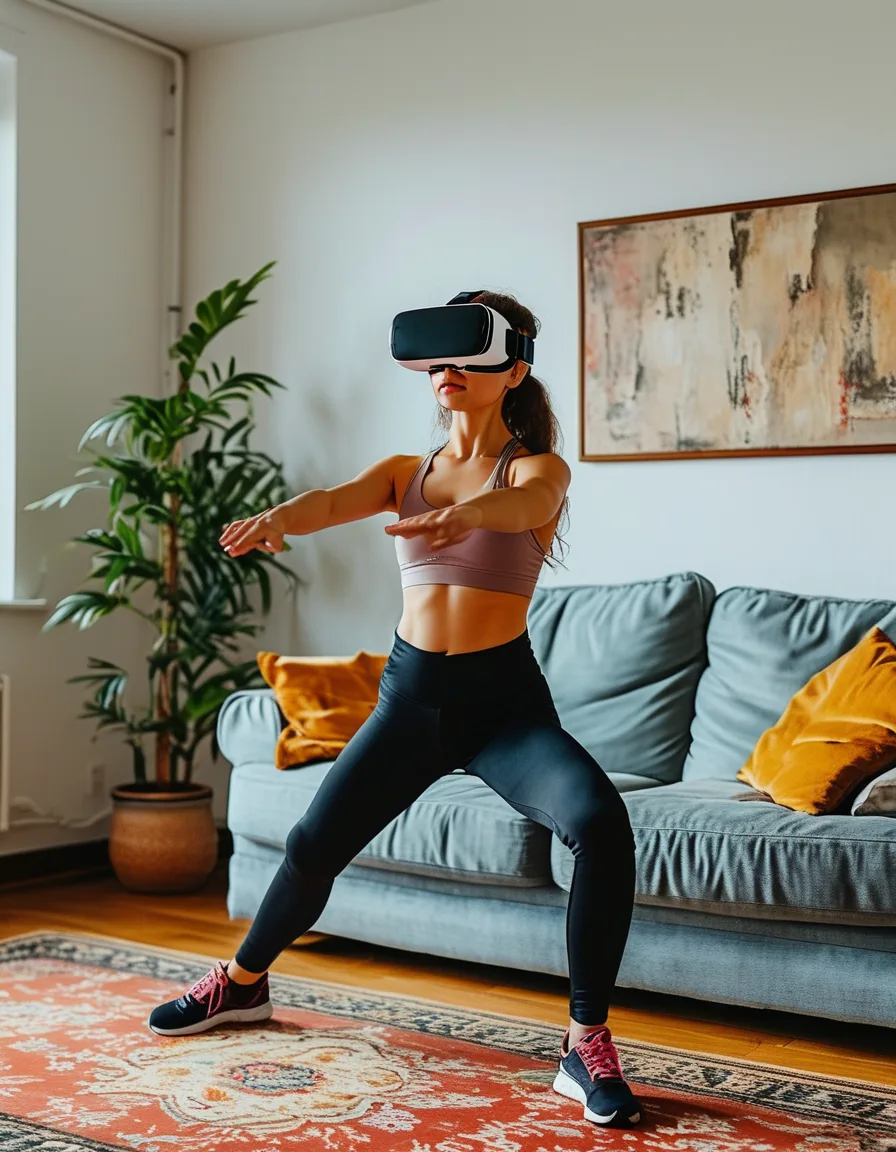
You strapped in ready to go all out, but somewhere around minute 10 you notice your punches are shorter than they should be, your squats shallower. That’s not fatigue talking — it’s your nervous system quietly protecting you from a coffee table it can half-sense through the headset.
Why does room setup affect workout intensity specifically?
Your brain integrates peripheral cues (even blocked by a headset, you retain some spatial memory and proprioception of nearby objects) with what the guardian boundary shows you. If real furniture sits just outside a tightly-drawn boundary, your nervous system registers residual collision risk and unconsciously shortens your movements as a protective measure — even if you never consciously think about it.
This shows up as pulled punches, shallower squats, and shorter reach on swinging motions, all without you realizing why.
What’s the actual buffer distance that fixes this?
At least 2 feet (about 60cm) between your drawn guardian boundary and any real furniture or walls, not just the minimum space the headset requires. This buffer gives your body genuine confidence that a full-extension movement won’t connect with anything solid.
For swinging or boxing-style VR fitness specifically, err toward more buffer on the sides where your arms extend furthest, since lateral movement is where most people unconsciously shrink first.
The VR Motion Sickness Connection Nobody Mentions
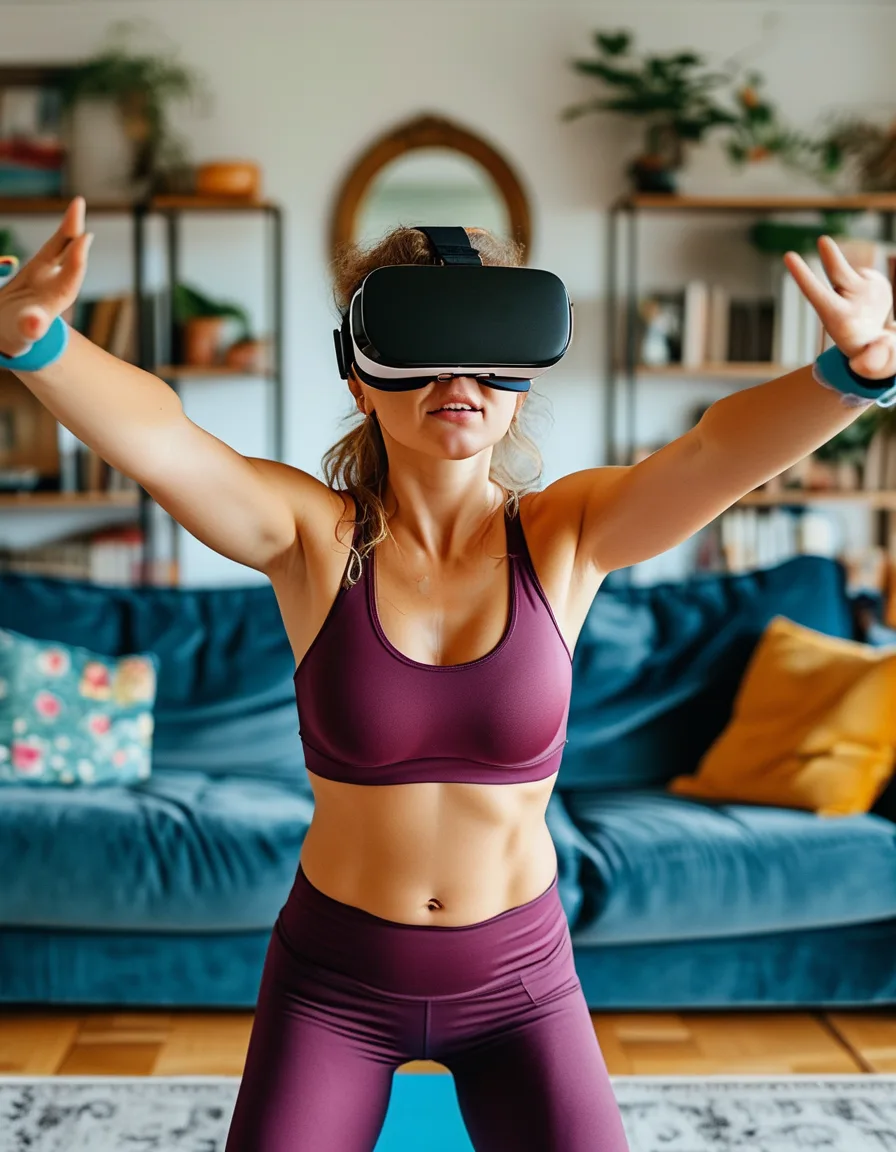
A cramped or poorly-buffered space compounds motion sickness risk too — hesitant, shortened movements combined with the visual motion of the game create a mismatch between what your inner ear expects and what your body actually does, which is a known contributor to VR discomfort. Full, confident movement in a properly buffered space often reduces this mismatch and, with it, motion sickness.
Myth vs Fact: VR Fitness Setup Edition
Myth: A small room means you can’t get a real workout in VR. Fact: Many VR fitness titles are designed for modest spaces (6x6 feet or so) — the issue usually isn’t total space, it’s how tightly the buffer is drawn within that space.
Myth: The guardian boundary warning is the only safety measure you need. Fact: The boundary warns you at the edge, but the buffer before the edge is what determines whether you move at full intensity long before you’d ever hit that warning.
Myth: VR fitness intensity is limited by the game’s design, not your space. Fact: The same game played in a cramped vs. well-buffered space produces measurably different movement amplitude in most users — space setup is a bigger intensity lever than people assume.
FAQ: VR Fitness Setup Questions, Answered
How much floor space do I actually need for VR fitness?
Most boxing or dance-style VR fitness games work within roughly 6.5 x 6.5 feet, provided that space has genuine buffer rather than being drawn edge-to-edge with furniture.
Does furniture need to be removed entirely for a good VR workout?
Not necessarily — pushing furniture back to create the buffer zone is often enough; full removal just makes the buffer easier to achieve.
Can a bad room setup actually reduce workout results over time?
Yes, indirectly — consistently shortened, held-back movements over weeks mean less actual training stimulus, even though the session still feels effortful and sweaty.
TL;DR:
- Unconscious movement pull-back in VR often comes from too-tight guardian boundaries, not fitness level
- Set at least 2 feet of buffer between your boundary and real furniture, more on your swing sides
- Full, confident movement in a buffered space can also reduce motion sickness
- The same VR workout produces different intensity depending on space setup, not just game design
Redraw your boundary with real buffer room before your next session and notice how much further your movements actually extend.
Keep Reading
This article is for general informational and styling purposes only. Fit, sizing, and product availability may vary.