4 Ways to Make VR Fitness Actually Work in a Small Apartment
Quick Answer: Small-space VR fitness works with a shrunk boundary calibration, padded corners on nearby furniture, a checked controller wrist strap, and attention to ventilation — none of it requires more square footage, just smarter setup.
Most VR fitness marketing shows huge open rooms, which makes a small apartment feel disqualifying before you’ve even tried. It isn’t — these four fixes make a genuinely tight space workable.
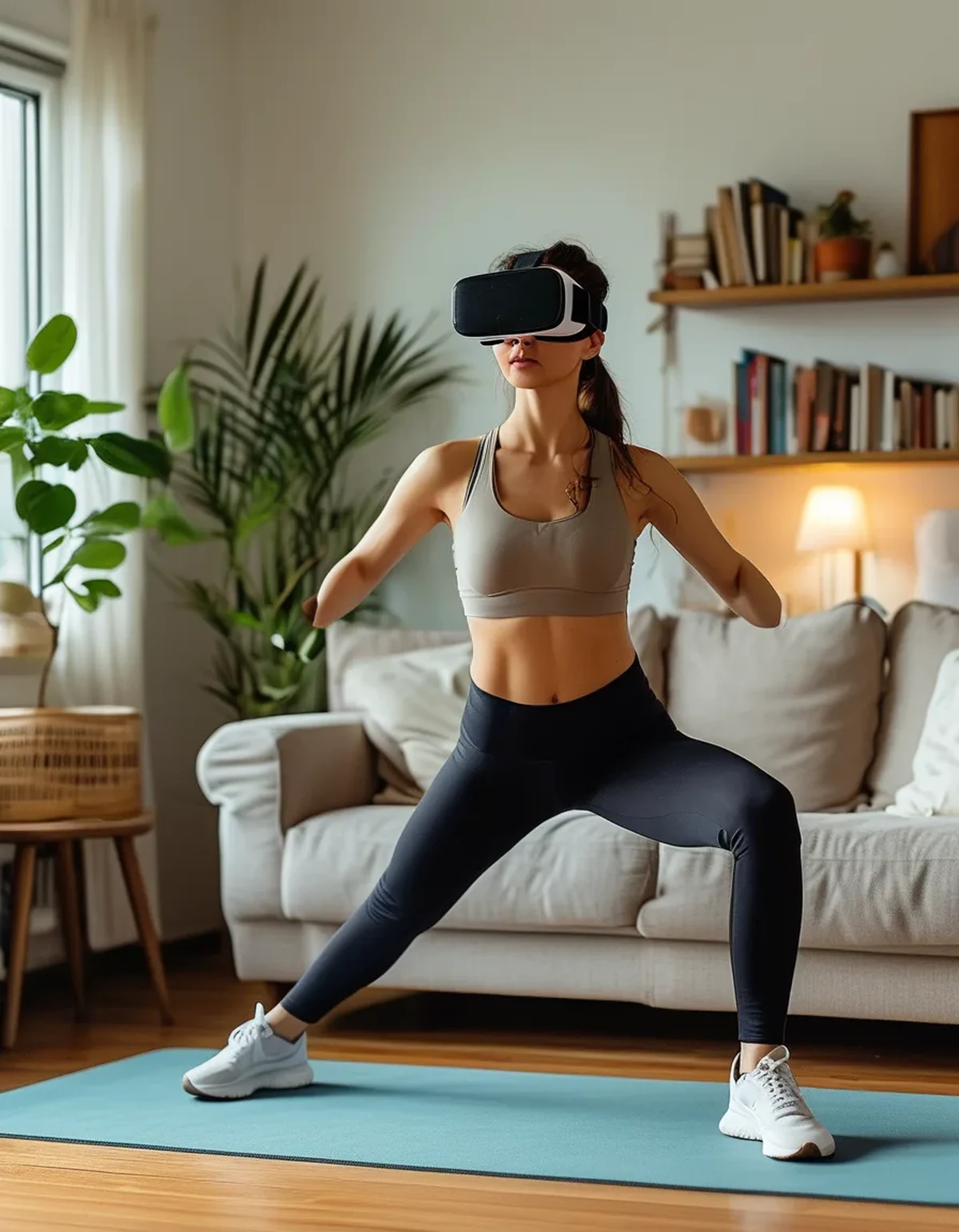
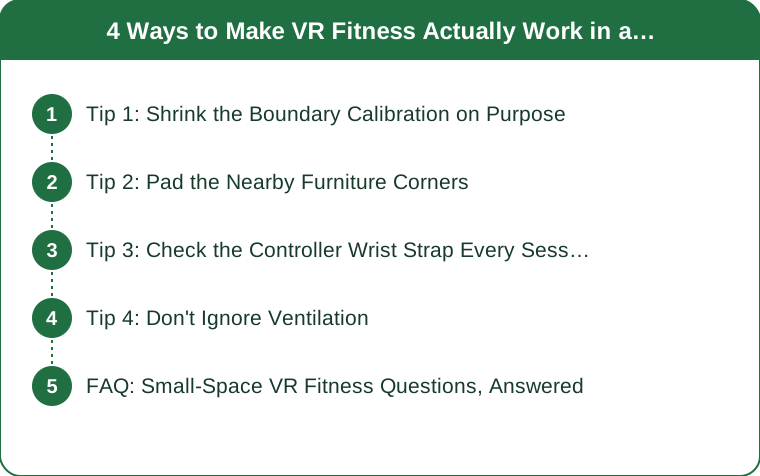
Tip 1: Shrink the Boundary Calibration on Purpose
Set the guardian boundary a few inches smaller than your actual clear space, not right up to the furniture edge. This buffer accounts for momentum in swing-based movements that a static measurement doesn’t capture.
Tip 2: Pad the Nearby Furniture Corners
A folded towel or foam corner guard on the nearest table or shelf edge turns an occasional bump from a real hazard into a non-event — cheap insurance for a space with less margin than a dedicated room.
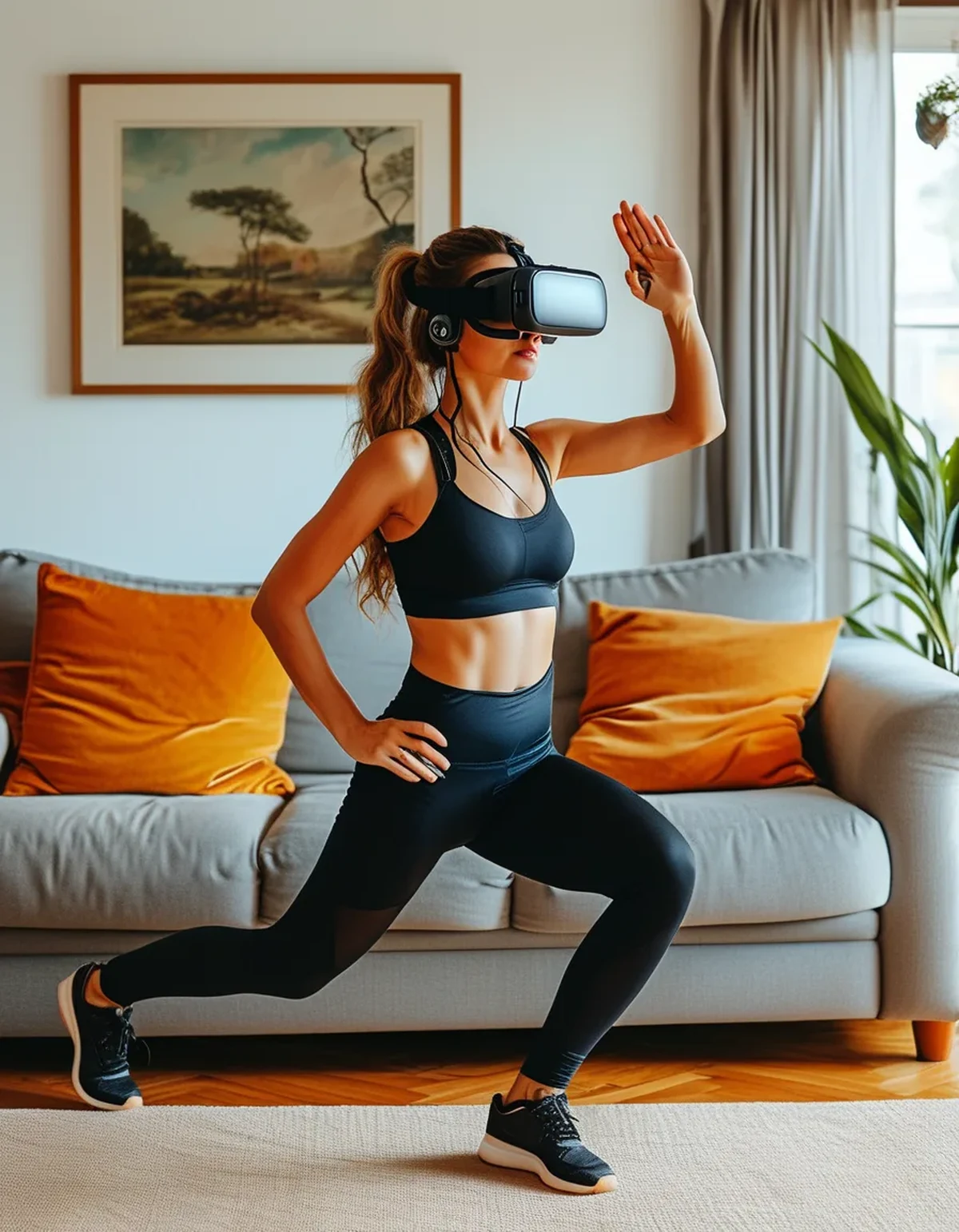
Tip 3: Check the Controller Wrist Strap Every Session
Small rooms mean less room to recover if a controller slips, so a snug, properly tightened wrist strap matters more here than in open spaces where a dropped controller just lands on clear floor.
Tip 4: Don’t Ignore Ventilation
Small rooms heat up fast during an intense VR session, and a fogged or slipping headset from heat buildup is more of a small-space problem than a large-room one. A fan running nearby, even a small one, meaningfully extends comfortable session length.
FAQ: Small-Space VR Fitness Questions, Answered
How much clear floor space do I actually need for VR fitness?
Most room-scale games work in a 6x6 foot area at minimum — smaller than most people assume, especially once furniture is pushed against the walls during sessions.
Does a smaller boundary reduce workout intensity?
Not meaningfully — most VR fitness titles are designed to scale movement intensity within the boundary you set, so a smaller safe zone doesn’t cap your effort level.
Is it worth moving furniture before every session?
For a dedicated corner it’s not necessary if the space is already clear; for shared living rooms, a quick 2-minute furniture shift before sessions is a reasonable tradeoff for safety.
TL;DR:
- Shrink your guardian boundary slightly smaller than the actual clear space for a safety buffer
- Pad nearby furniture corners — cheap insurance in a tight room
- Check the wrist strap every session since there’s less room to recover from a slip
- Add airflow to prevent headset fogging during intense sessions
Square footage isn’t the blocker most people assume — a few setup habits make VR fitness work in almost any room.
Keep Reading
This article is for general informational and styling purposes only. Fit, sizing, and product availability may vary.